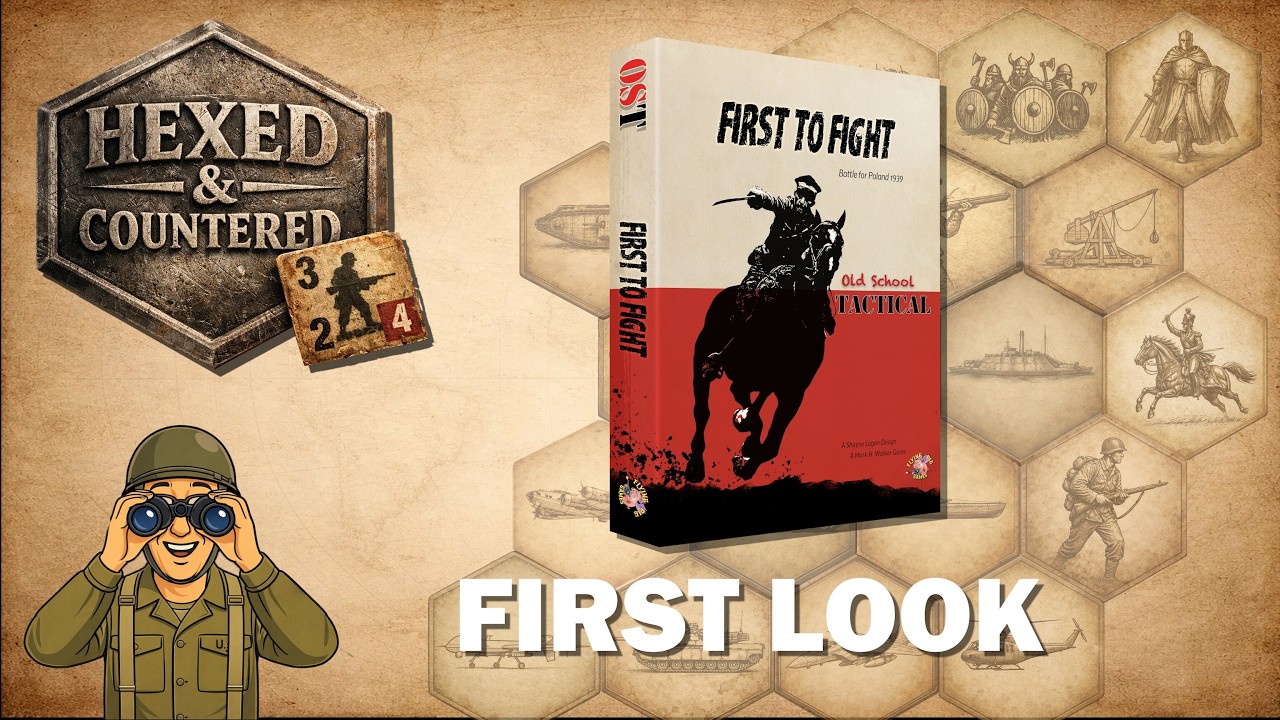
Poland, September 1939, is where the Second World War began and where a lot of wargames never bother to go. Old School Tactical Vol. 5: First to Fight from Flying Pig Games takes the popular tactical system back to the opening campaign, and in this first look I go through the components and what the expansion adds.
The forgotten opening
The 1939 campaign is more interesting than its reputation suggests — the Polish army was not the pushover of popular memory, and the early-war mix of tankettes, cavalry, and improvised defense makes for a very different tactical puzzle than the mid-war battles the system usually covers. Old School Tactical is known for being approachable without being shallow, and this first look sets up how the Poland material plays inside that framework.
Scenario playthroughs follow this overview. Subscribe to see it hit the table.
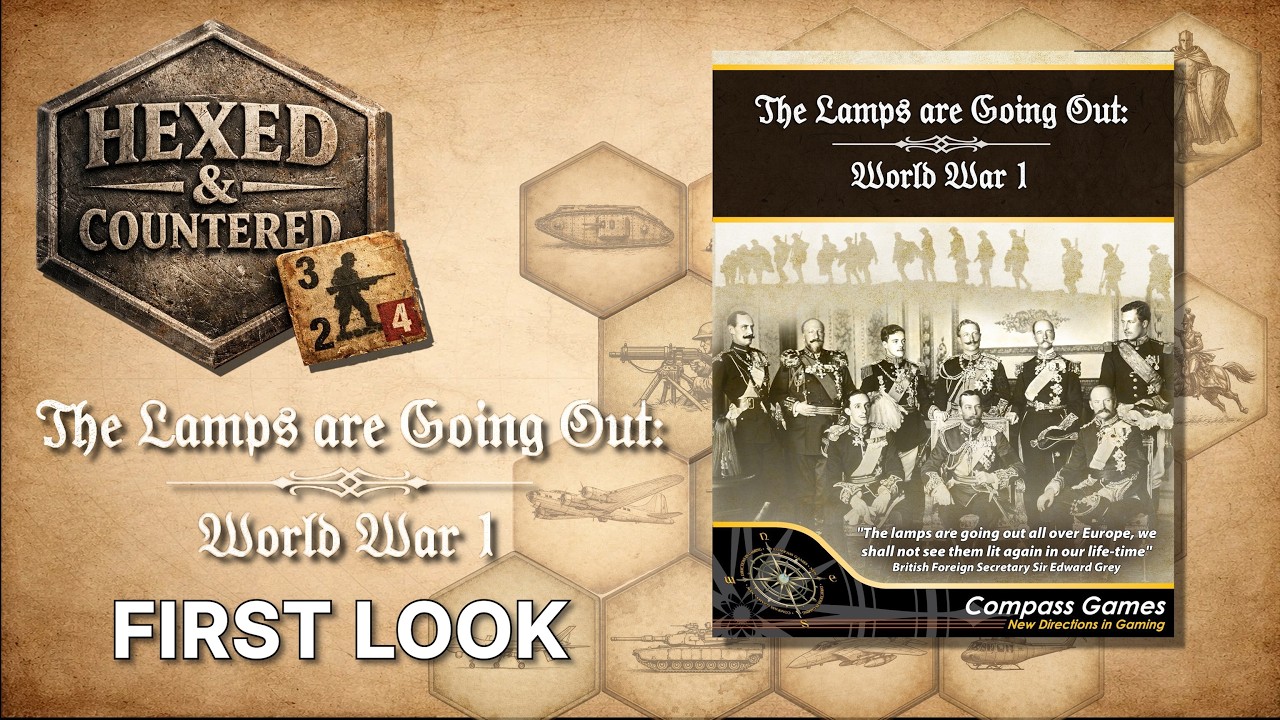
The title comes from Sir Edward Grey on the eve of war — “the lamps are going out all over Europe” — and Compass Games’ The Lamps Are Going Out sets out to put that whole catastrophe in your hands. It’s a card-driven, solitaire-friendly treatment of the entire First World War, and in this first look I go through the map, the cards, and the flow of a turn.
Grand strategy you can run alone
What makes this one interesting is how it compresses four years of grand strategy — multiple fronts, the home fronts, technology, and the ever-present pressure of national will — into something a single player can actually manage in an evening or two. Card-driven systems are well suited to that job: the deck paces the war, throws events at you, and forces hard choices about where to spend a finite hand. A first look is the right place to see whether that machinery clicks before you commit to a full campaign.
Gameplay follows this overview, so if the system appeals, subscribe and follow the war as it unfolds on the table.
Solitaire-friendly first looks and playthroughs, several times a week. Subscribe to follow along.
Solo Traveller has a well-earned reputation, and so does its paperwork. Between world generation, encounter tables, trade runs, and tracking a crew’s worth of skills and gear, a good session can spend as much time on the ledger as on the adventure. That’s the itch I’ve been trying to scratch with a small solo app — and in this video I walk through the beta.
Keep the game, lose the bookkeeping
The goal isn’t to replace the referee in your head — that’s the best part of solo play. It’s to take the mechanical drag off the table: the rolls, the lookups, and the record-keeping that slow a session to a crawl. Handle those quickly and cleanly, and the decisions that actually matter get room to breathe.
It’s very much a beta, and I’d rather show it warts-and-all than sit on it until it’s “perfect.” If you play solo Traveller, the video is the fastest way to see what it does and where it’s headed. Feedback from people who actually run these campaigns is exactly what shapes where it goes next — so if you have thoughts, I want to hear them.
Building tools for solo gamers is part of what this channel is about. Subscribe to follow the app’s progress.
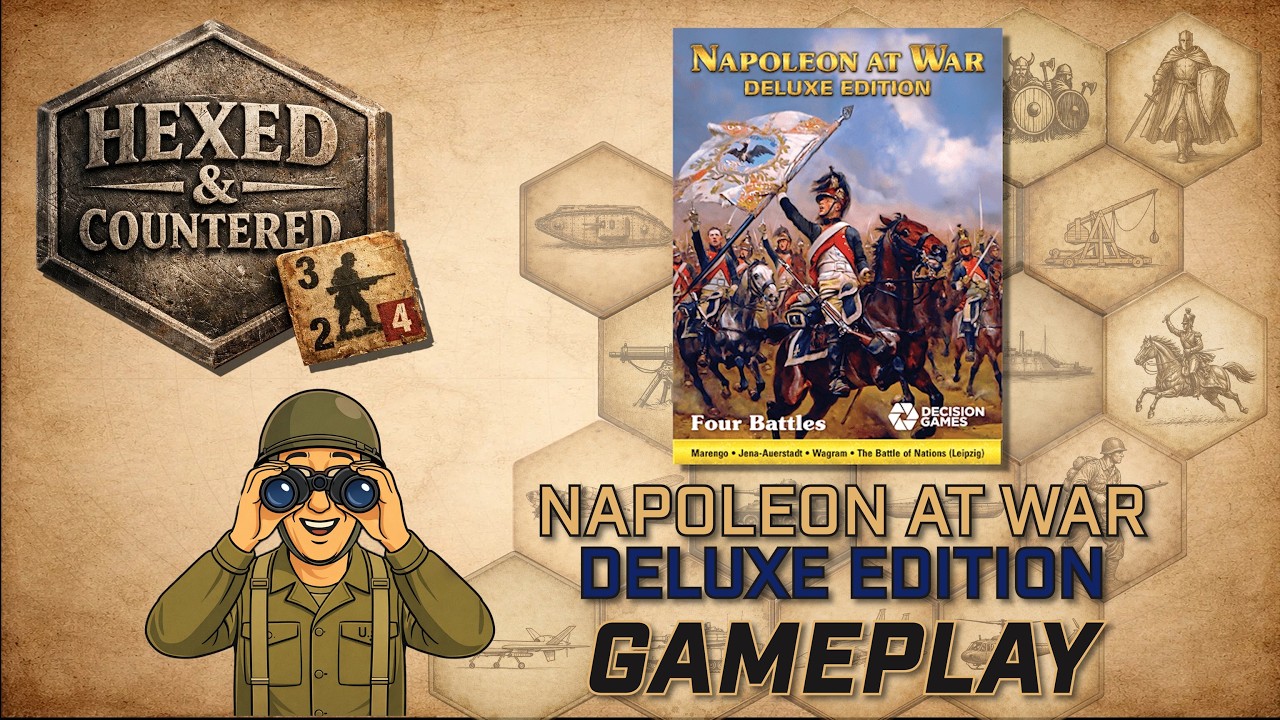
Marengo is one of history’s great near-run things. On the morning of 14 June 1800, Napoleon had badly misjudged the Austrians and spent most of the day losing; by evening, a counterattack turned catastrophe into the victory that secured his hold on France. That kind of swing is exactly what a good battle game wants to capture, and in this one I take Napoleon at War: Deluxe Edition from Decision Games onto the Marengo field.
A day that turned late
The interesting design question at Marengo is timing. Get the tempo wrong and you’re simply replaying a defeat; the system has to give the late reinforcements a chance to matter without handing them the day for free. Watching it play out is the best way to judge whether the Deluxe treatment strikes that balance — and whether the classic Napoleonic tension of lines, columns, and cavalry reserves comes through on the table.
More Napoleonic battles, played through in full. Subscribe to follow the campaign.
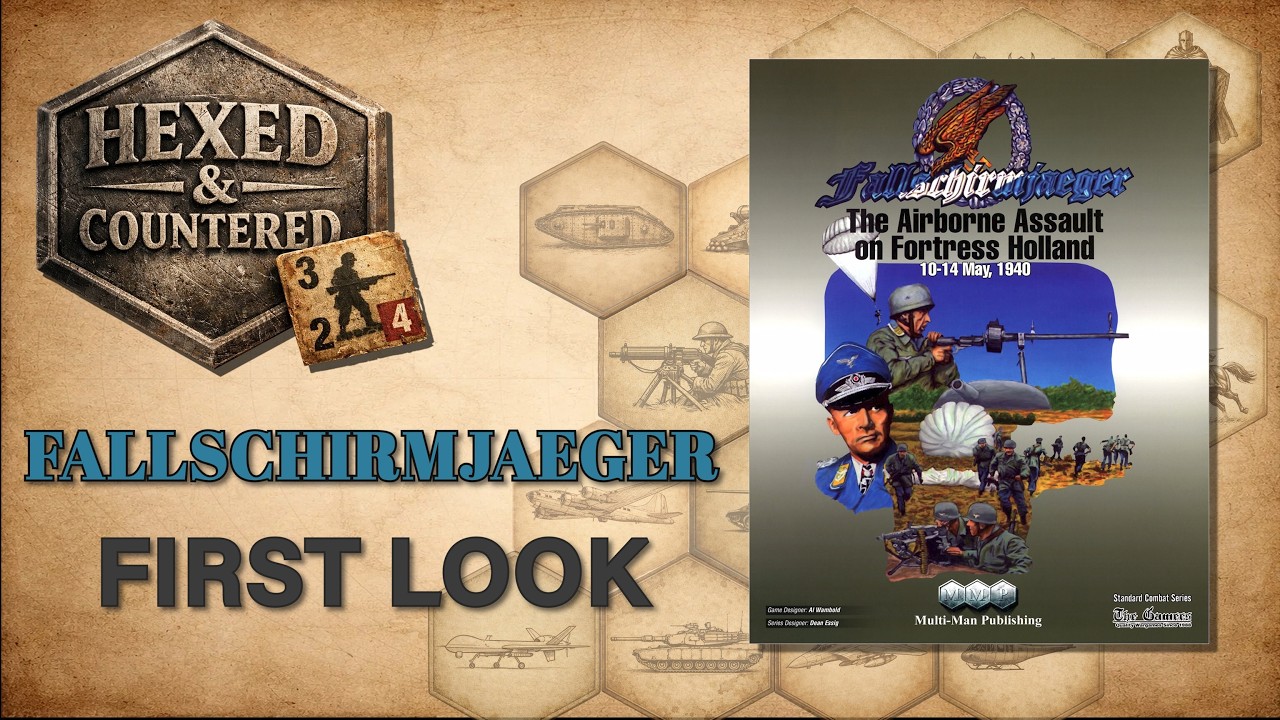
In May 1940 the Germans tried something no one had done at scale before: seizing a country’s bridges and airfields from the sky. Fallschirmjäger: The Airborne Assault on Fortress Holland covers that gamble, and MMP has brought it back as part of the Standard Combat Series. In this first look I unbox the reprint and go through what’s in it.
SCS speed, airborne problems
Designed by Al Wambold on Dean Essig’s Standard Combat Series engine, this is a medium-complexity game with decent solitaire suitability — a genuinely approachable entry point into World War II tactical gaming. The box includes the version 1.8 SCS rules, the game-specific rules, 560 counters, and a 22″×34″ map, plus three scenarios: the introductory bridges at Noorderke and Dordrecht, the assault on Den Haag, and the full Fortress Holland campaign. The airborne angle is what makes it stand out — you’re landing scattered and light, and everything depends on how fast you can pull yourself together before the defenders do.
If the Standard Combat Series is your speed, there’s plenty more here. Subscribe to keep up.
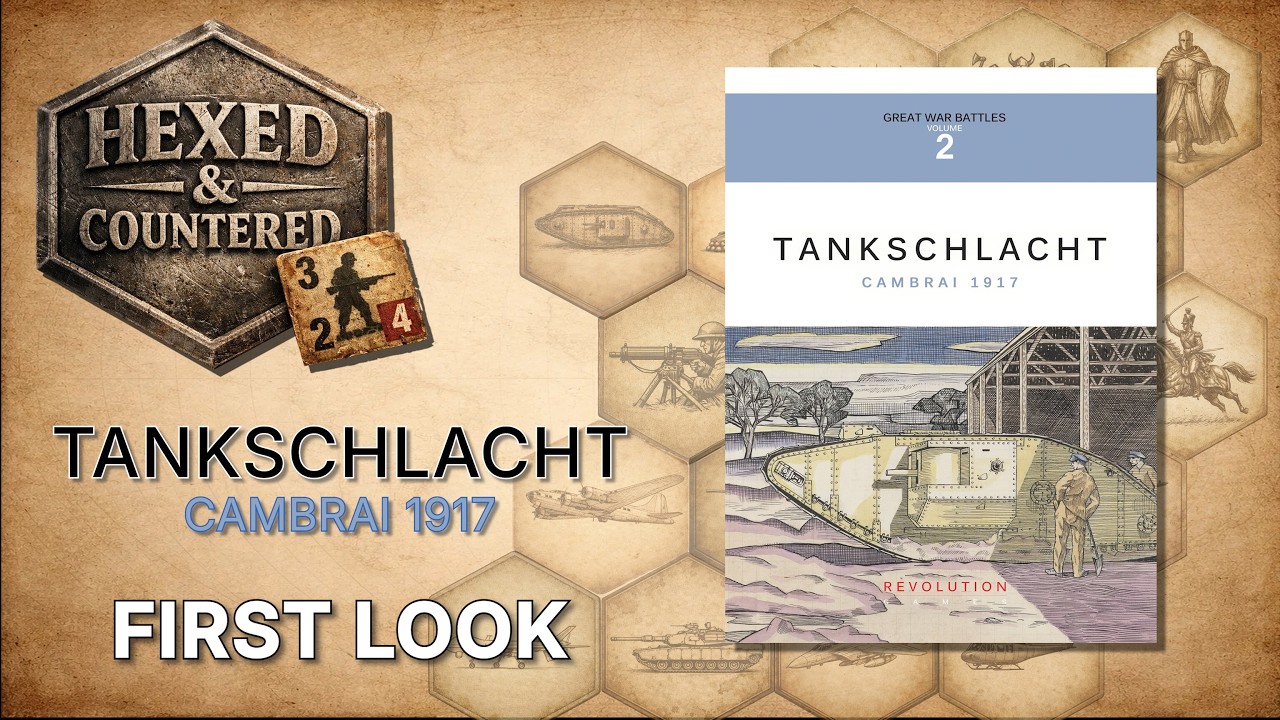
Cambrai in November 1917 is where the tank stopped being a curiosity and started being a weapon — the first massed armored assault in history, and a preview of the way wars would be fought for the next century. Tankschlacht from Revolution Games takes on that moment, and in this first look I walk through the components and the system before diving into the gameplay series.
The birth of combined arms
What makes Cambrai interesting on the table is the same thing that made it interesting in 1917: tanks alone don’t win, and infantry alone can’t keep up. A good treatment forces you to coordinate the two, manage the mechanical unreliability of those early machines, and reckon with the German counterattack that erased much of the initial gain. This first look sets up how the game frames those problems; the playthroughs put them to the test.
The full Cambrai gameplay series continues on the channel. Subscribe to follow the battle.
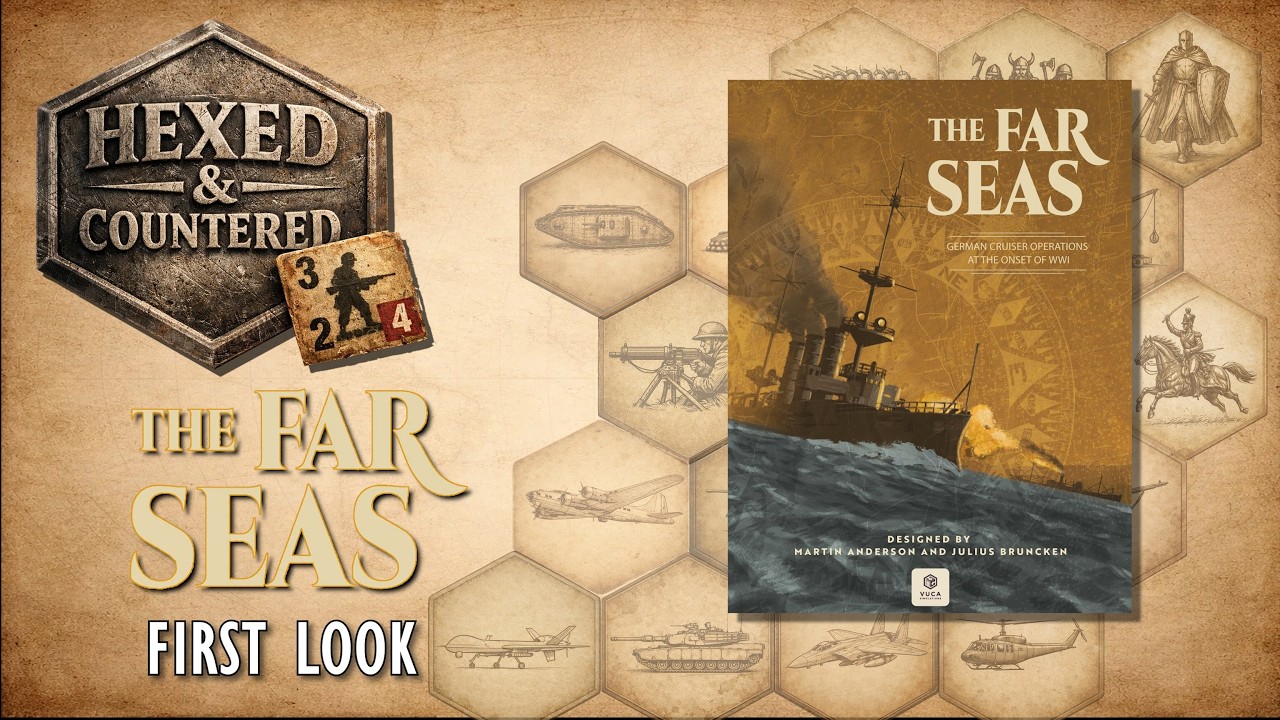
When war broke out in 1914, Germany had a squadron of modern cruisers on the far side of the world under Admiral Graf von Spee, with no way home and every reason to make trouble. The Far Seas, designed by Martin Anderson and Julius Brunken for Vuca Simulations, turns that opening chapter of the naval war into a solo-friendly game of raiding and pursuit. In this first look I open the box and walk the system.
A raider’s problem
Commerce raiding is a wonderful subject for solo play because the tension is baked in: a cruiser at large is powerful but fragile, hunted by a Royal Navy that can afford to lose ships in a way you cannot. The game hangs on coaling, intelligence, and knowing when a prize is worth the risk of being pinned down. The components look excellent, and the design offers several solitaire approaches — this first look covers the sequence of play, combat, and how the hunt comes together.
A two-part solo playthrough follows this overview. Subscribe to sail with the squadron.
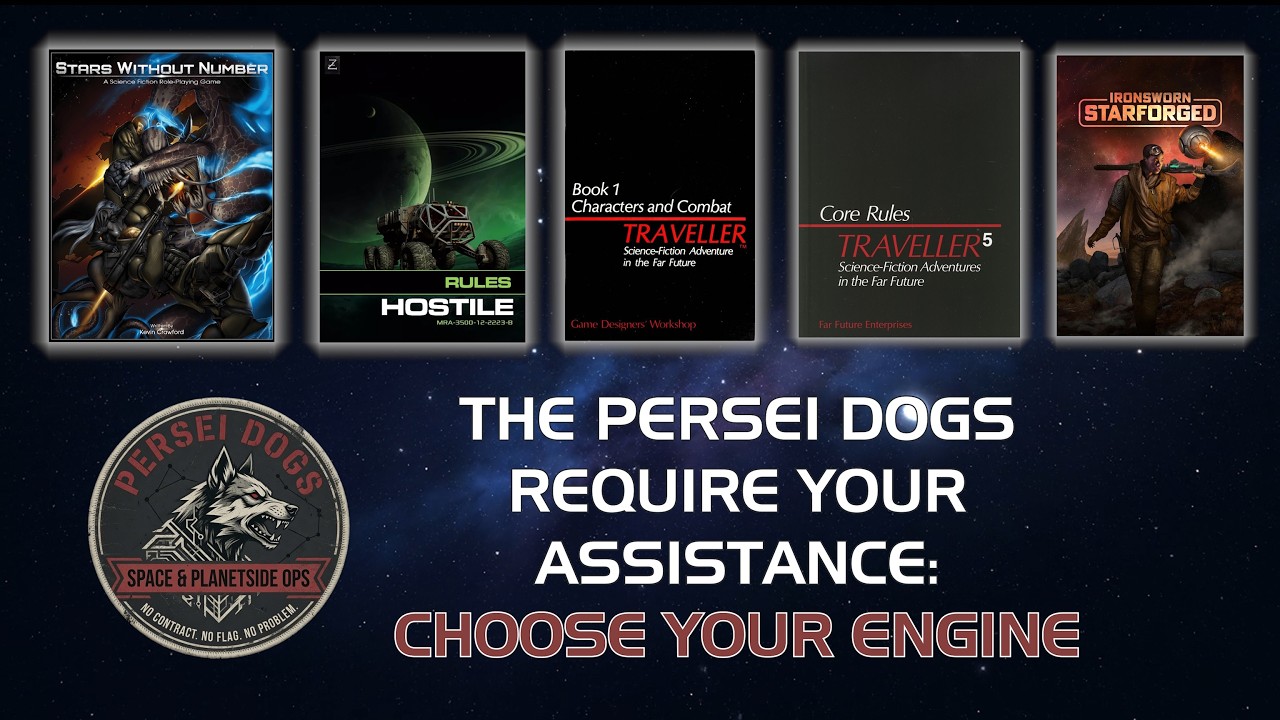
I want to run a sci-fi campaign for the channel, and the modern hobby is spoiled for good engines to run it on. So rather than just pick one, I laid out four contenders and put it to a vote. Each of these could carry a long-running campaign; they just get there in completely different ways.
The four contenders
Traveller — the 1977 granddaddy of sci-fi RPGs. Grounded, career-driven, and built for exactly the kind of hard-edged spacefaring sandbox I keep coming back to.
Hostile (Zozer Games) — a blue-collar, “used future” setting in the Alien mold, running on a Cepheus/Traveller-compatible chassis. Grim, atmospheric, and perfect for survival-horror in the dark between stars.
Stars Without Number (Sine Nomine) — an OSR sci-fi toolkit loaded with sandbox generators. Half rulebook, half sector-building machine, and famously friendly to solo and referee-less play.
Ironsworn: Starforged — a PbtA-descended engine designed from the ground up for solo and co-op play, where the oracles and moves do the heavy narrative lifting.
The honest truth is I’d be happy running any of them — but they’d produce very different shows. Traveller and Hostile lean into simulation and consequence; Starforged leans into emergent story; Stars Without Number sits comfortably between. Watch the rundown, then tell me where to point the ship.
The winning engine becomes a full solo campaign on the channel. Subscribe so you don’t miss session one.
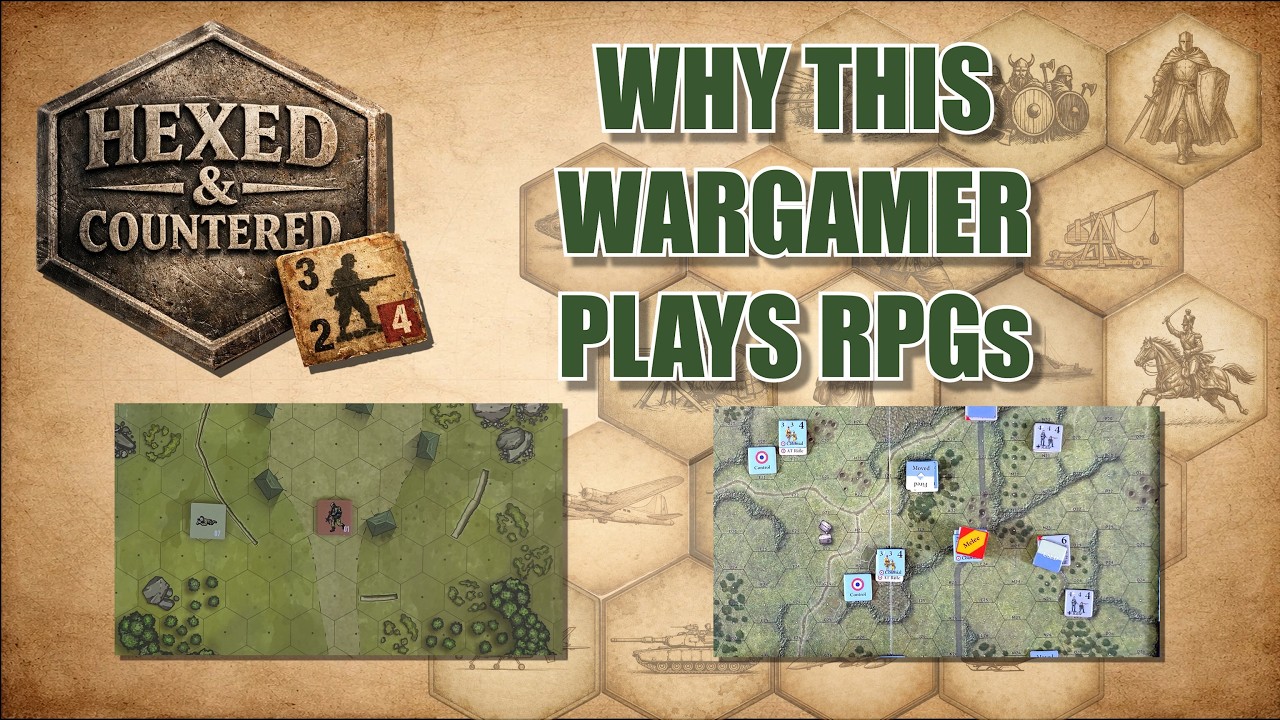
After forty-odd years of pushing cardboard counters across hex maps, I didn’t expect roleplaying games to grab me the way they have. But the longer I play, the clearer the throughline gets. The things that make a great wargame — meaningful decisions, real consequences, and a system that models something true — are exactly what a good RPG delivers. It’s just pointed at people instead of armies.
Same instincts, different scale
Wargaming trains you to read a situation: weigh the odds, spot the decisive point, and accept that a plan only survives until contact. An RPG asks a smaller, sharper version of the same question — not “where does the division attack,” but “what does this person do next, and what does it cost them.” If you already think in terms of tempo, risk, and consequence, you’re most of the way there.
Solo play is the bridge
I came to RPGs the way a lot of wargamers do: through solo play. A solo session of Traveller or Twilight: 2000 scratches the same itch as a solo wargame. You set the situation, the system pushes back, and the story falls out of decisions made under pressure. No group to schedule, no table to referee — just you, the rules, and the dice telling you how badly your clever idea went.
The systems I keep returning to lean tactical for exactly that reason. Traveller and Twilight: 2000 reward planning, logistics, and knowing when a fight isn’t worth having. Those are grognard instincts, and they translate cleanly.
If you’ve been wargaming for years and quietly told yourself RPGs “aren’t for you,” this is the video where I make the case that they might be. Give it a watch, then come argue with me.
Hexed & Countered covers solo-friendly wargames and RPGs — first looks, full playthroughs, and campaign journals, several times a week.
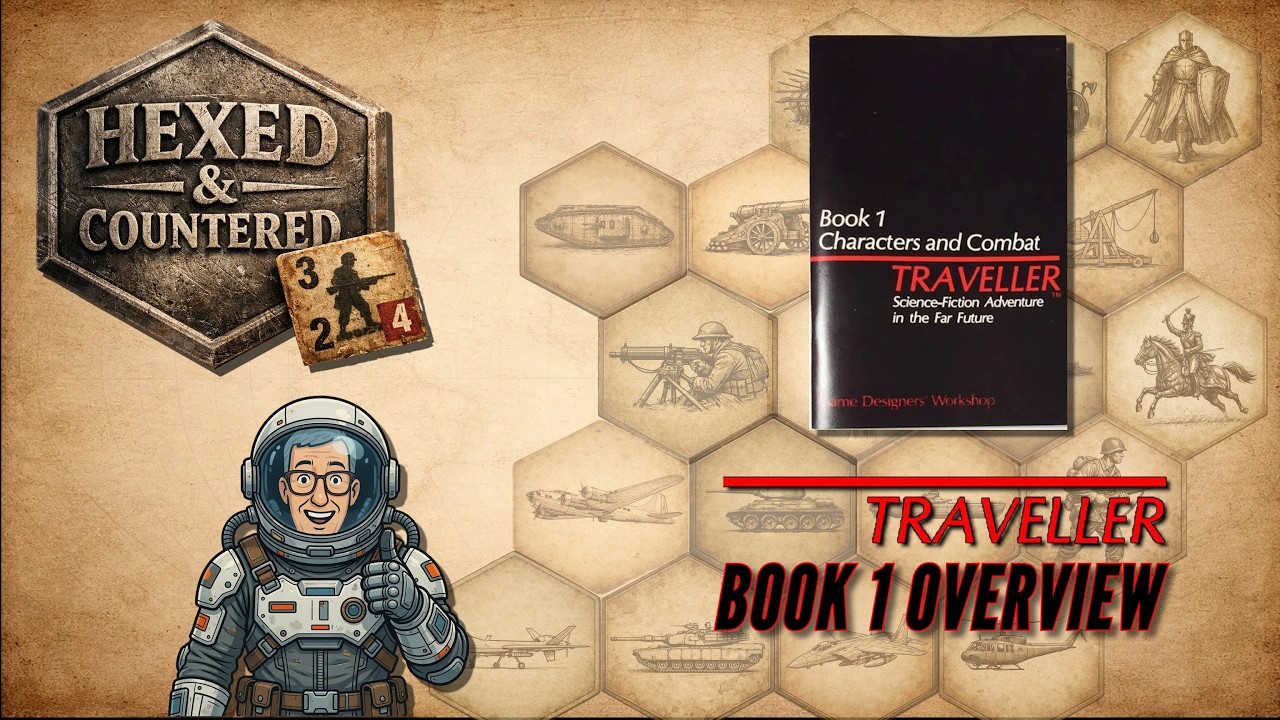
Before there were splatbooks and boxed sets the size of a footlocker, there were three slim black digest booklets from Game Designers’ Workshop. Published in 1977, Traveller is one of the oldest roleplaying games still in print, and the original “Little Black Books” are where the whole sprawling universe begins. In this one I open Book 1 — Characters and Combat — and look at how much game GDW packed into so few pages.
A career before the campaign
Traveller’s character generation is the part everyone remembers, and for good reason. You don’t just roll a spacer — you play out a prior career, term by term, gaining skills, mustering-out benefits, and a personal history before the first session ever starts. In the 1977 rules that history could end early and permanently: fail the wrong roll and your character died in chargen. It sounds brutal, and it is, but it’s also the clearest possible statement of what the game is about. Choices have weight, and the universe doesn’t owe you a happy ending.
Why it still holds up
What strikes me going back to Book 1 is how lean and usable it is. The combat is quick, the skill list is tight, and the whole thing assumes an intelligent referee rather than a rule for every situation. For a solo player that’s a feature: the system gets out of the way and lets the situation do the talking. If you’ve only met Traveller through its later, heavier editions, the original booklets are worth the trip back to the source.
This is the first of an ongoing look at Classic Traveller and the wider GDW library. Subscribe to follow the series.