Author: Hexed & Countered

  • World War I: Deluxe Edition (Decision Games) — Gameplay (Part 1)

    World War I: Deluxe Edition (Decision Games) — Gameplay (Part 1)

    After the first look, the real question with any strategic-level wargame is how the first turn feels, and in World War I: Deluxe Edition from Decision Games, the first turn is 1914, with all the weight that carries. This is Part 1 of the playthrough.

    The whole war, from turn one

    The Deluxe Edition covers the entire Great War at a strategic level, and I start with a full top-to-bottom look at the map so the geography makes sense before any units move. From there it’s into the summer impulse phases of 1914: the German invasion of Belgium, the thin but critical Eastern Front, and the mobilization of the Balkan states. Even this early, the game is asking real questions: where to commit, when to accept a risky combat differential, and how to spend mobilization points that never quite stretch far enough.

    Early impressions in play

    What comes through in Part 1 is how much the opening moves shape everything after. The decisions aren’t flashy, but they’re consequential, and the system does a good job of making 1914 feel like a genuine fork in the road rather than a scripted opening. If you want the components-and-rules overview first, I covered that in the first look. This is the game in motion, heading toward the winter of 1914 and the hard choices waiting there.

    The campaign continues in future parts. Subscribe to follow it through the war.

  • The Lamps Are Going Out — World War I (Compass Games) — Gameplay

    The Lamps Are Going Out — World War I (Compass Games) — Gameplay

    Grand-strategic World War I games ask you to hold the whole continent in your head at once, and The Lamps Are Going Out (designed by Kirk Uhlmann and published by Compass Games) is one of the more ambitious takes on that idea. This episode walks through the opening turns of 1914.

    1914 and the plans that shaped it

    The playthrough opens with the historical framing the game leans on: the German Schlieffen Plan and the French Plan 17, both of which the system models rather than just references. I go through the map and its production centers, the seasonal turn structure, and the core mechanics of movement, naval blockade, and ground combat. Event cards (like First-Line Formations) add texture to each turn, and production points are the currency that fuels the whole war effort.

    Blockade, the Big Push, and playing it solo

    Two things stand out early. The naval side is more than set dressing; the North Sea blockade and the naval combat give the Allies a slow, grinding lever to pull. And ground combat, resolved through “The Big Push” and its dice-off, captures the costly, incremental nature of the fighting without drowning you in detail. The German forces push into Belgium while the Western Allies attempt a mandatory and genuinely awkward counter-offensive in the Rhine. Solo, it’s a lot to track at first, but the structure is logical once it clicks, and Part 1 lays the groundwork for the campaign to come.

    The war unfolds across the playthrough series. Subscribe to see where it goes.

  • Battle Brothers — The Hexed: From Arena Wipe to Bounty Hunt (Episode 1)

    Battle Brothers — The Hexed: From Arena Wipe to Bounty Hunt (Episode 1)

    Every Battle Brothers campaign starts with optimism and a roster that has no idea what’s coming. This is Episode 1 of the Hexed — a fresh mercenary company in Overhype Studios’ turn-based tactical RPG — and it does not go smoothly, which is exactly why it’s worth watching.

    From arena wipe to starting over

    The southern city-states and their arenas are a tempting way to make early coin, and they’re also a fast way to lose your whole company if you overreach. We find that out the hard way via an arena wipe early on. With everyone dead, I soldier on… by starting over.

    Rebuilding and the first real bounty

    With a clean slate, we rebuild the roster, gear up the brothers, and start taking contracts the company can actually survive. The episode’s throughline is hunting down Hoggart the Weasel: a bounty target that gives the young company its first taste of renown. This is the loop that makes the game sing for solo play: recruit, equip, take a job that’s slightly beyond your comfort zone, and see who’s still standing afterward. Consider this the setup; things only get harder from here.

    This is the start of the Hexed campaign — more episodes to come. Subscribe to see how far they get.

  • Sensuikan: Japanese Fleet Submarines in WWII (Compass Games) — First Look

    Sensuikan: Japanese Fleet Submarines in WWII (Compass Games) — First Look

    The submarine war in the Pacific is almost always told from the American side, which makes Sensuikan a welcome change of periscope. This one from Compass Games hands you the Imperial Japanese Navy’s submarine arm — a force with excellent boats, capable crews, and a doctrine that too often sent them chasing warships instead of the supply lines that might have mattered more. In this first look I go through the box and the rules so you know what you’re getting into.

    A theater that rewards patience

    Submarine games live and die on tension — the long stalk, the firing solution, and the gut-check decision of whether to shoot and give away your position. A first look is the place to see how the sequence of play, the detection rules, and the campaign structure turn that into something you can run solo on the table. If the system captures the patience-then-panic rhythm of undersea warfare, it earns its spot.

    First looks here lead straight into full playthroughs. Subscribe to see this one dive.

  • The 6: My Favorite World War I Solitaire Wargames

    The 6: My Favorite World War I Solitaire Wargames

    World War I usually takes a backseat to other eras in wargaming, which has always struck me as a missed opportunity. The Great War produces some of the most compelling solo experiences available — the tension, the tragedy, and the tactical problems that have no clean answers. In this countdown I run through my six favorite solitaire WWI games, the ones that keep earning a spot on the table.

    Why the Great War rewards solo play

    The range on offer is wider than people expect. You can spend an hour on a nerve-shredding trench raid, hunt convoys in the cold Atlantic, or fly the sweeping aerial campaigns over the Western Front. Some of these are quick, self-contained puzzles; others are career-spanning narratives where you sweat every replacement and every roll on the wound table. That spread — from tight one-session games to long, personal campaigns — is exactly why the era suits solitaire so well.

    I’m not going to spoil the order here — the full ranking, with what each game does well and who it’s for, is in the video. If you’ve been sleeping on WWI as a solo subject, start with number one and work backwards; I don’t think you’ll be disappointed. And if your own list looks different, that’s half the fun — tell me what I got wrong.

    Want more of the era? There’s a longer look at the period on the site in In the Trenches: Devil Dogs.

    Countdowns, first looks, and full solo playthroughs land on the channel every week. Subscribe to keep up.

  • World War I: Deluxe Edition (Decision Games) — First Look

    World War I: Deluxe Edition (Decision Games) — First Look

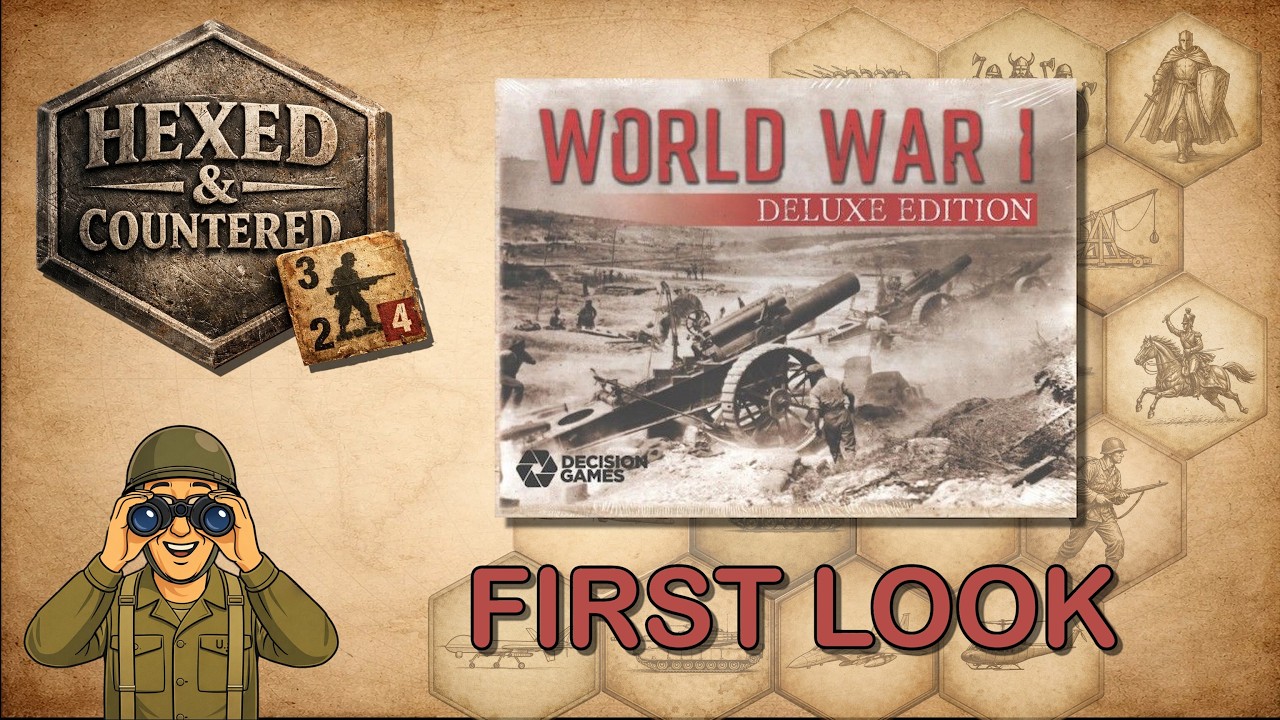
    Putting the whole of World War I into a single boxed wargame is an ambitious ask, and World War I: Deluxe Edition from Decision Games sets out to do exactly that — the entire war, from the opening offensives to the final collapse, on one strategic map. In this first look I open the box, walk the components, and cover the rules well enough that you’ll know whether it’s a system you want to spend time with.

    The whole war in one box

    Strategic-level treatments of the Great War live or die on how they handle the things that actually decided it — the grinding stalemate of the Western Front, the wider war in the east and south, and the slow arithmetic of attrition and supply. A first look is the place to see how the map, the counters, and the sequence of play frame those problems, and whether the design keeps them legible without drowning you in chrome.

    This is the opening of a series — gameplay follows, where the system gets tested where it counts, on the table. Watch the first look for the overview, then follow along as the war plays out.

    First looks here always lead into full playthroughs. Subscribe to see how this one holds up in play.

  • Old School Tactical Vol. 5: First to Fight — Battle for Poland 1939 (Flying Pig Games) — First Look

    Old School Tactical Vol. 5: First to Fight — Battle for Poland 1939 (Flying Pig Games) — First Look

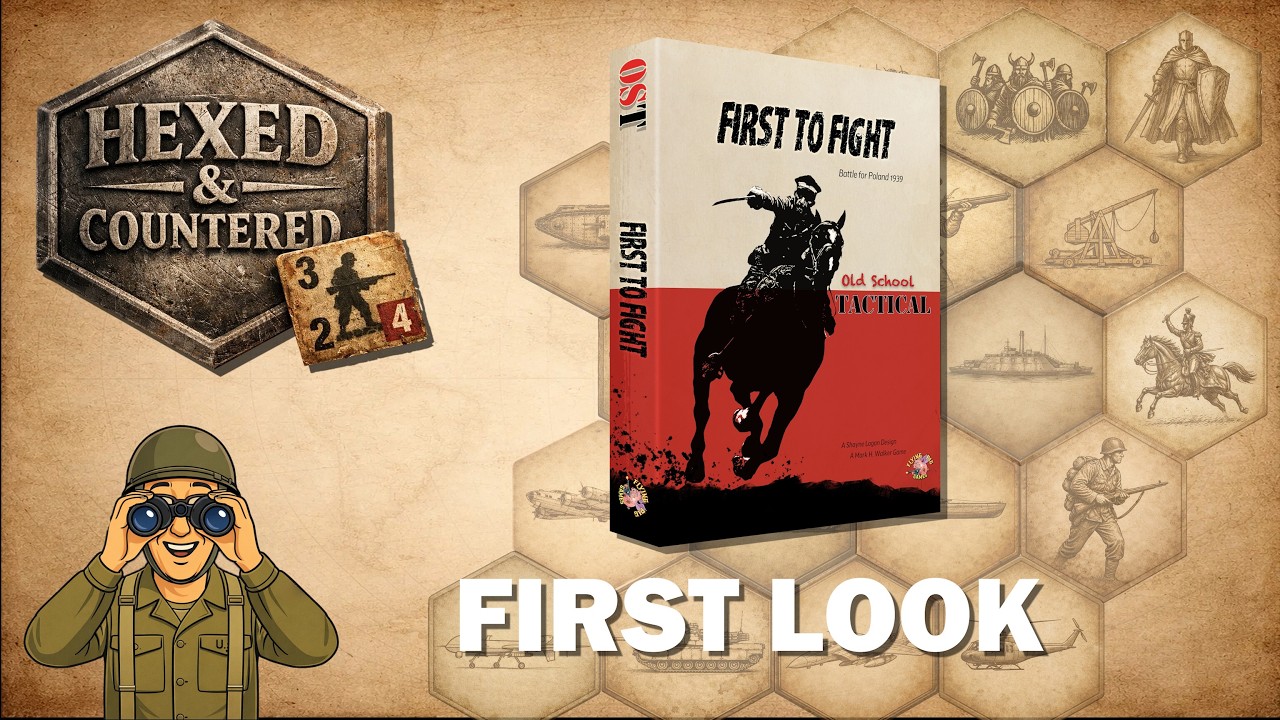
    Poland, September 1939, is where the Second World War began and where a lot of wargames never bother to go. Old School Tactical Vol. 5: First to Fight from Flying Pig Games takes the popular tactical system back to the opening campaign, and in this first look I go through the components and what the expansion adds.

    The forgotten opening

    The 1939 campaign is more interesting than its reputation suggests — the Polish army was not the pushover of popular memory, and the early-war mix of tankettes, cavalry, and improvised defense makes for a very different tactical puzzle than the mid-war battles the system usually covers. Old School Tactical is known for being approachable without being shallow, and this first look sets up how the Poland material plays inside that framework.

    Scenario playthroughs follow this overview. Subscribe to see it hit the table.

  • The Lamps Are Going Out (Compass Games) — First Look

    The Lamps Are Going Out (Compass Games) — First Look

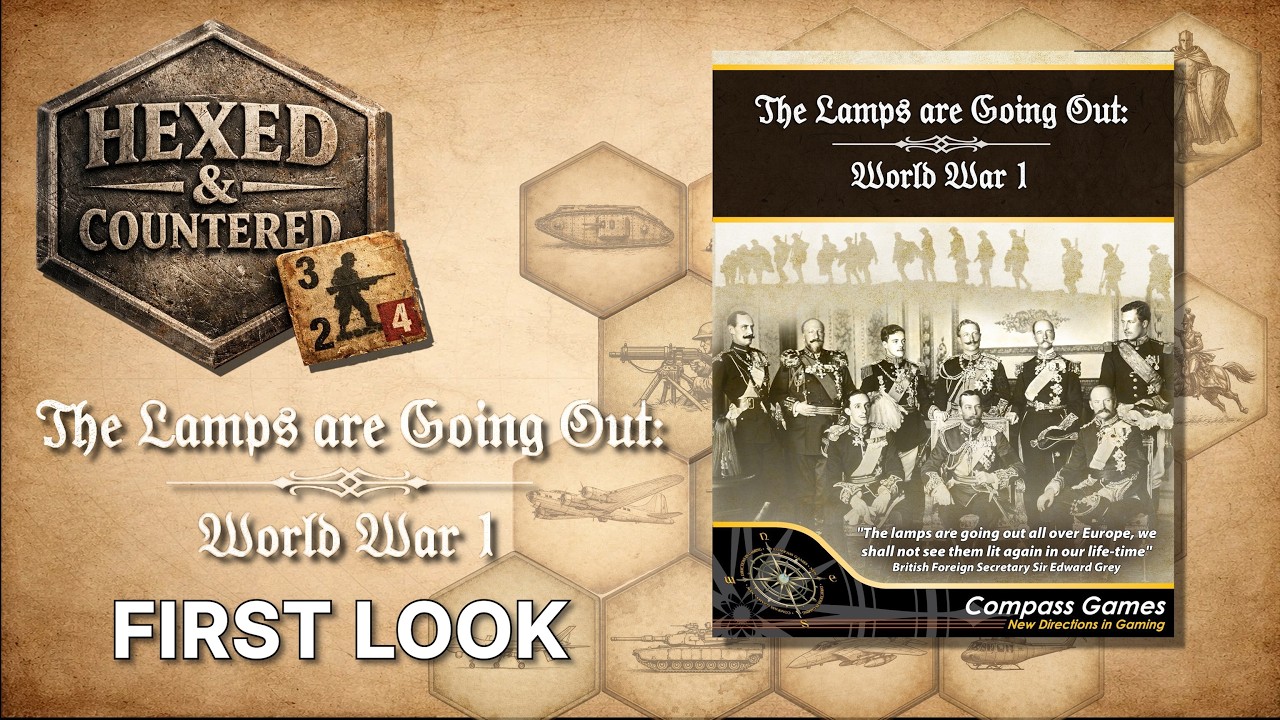
    The title comes from Sir Edward Grey on the eve of war — “the lamps are going out all over Europe” — and Compass Games’ The Lamps Are Going Out sets out to put that whole catastrophe in your hands. It’s a card-driven, solitaire-friendly treatment of the entire First World War, and in this first look I go through the map, the cards, and the flow of a turn.

    Grand strategy you can run alone

    What makes this one interesting is how it compresses four years of grand strategy — multiple fronts, the home fronts, technology, and the ever-present pressure of national will — into something a single player can actually manage in an evening or two. Card-driven systems are well suited to that job: the deck paces the war, throws events at you, and forces hard choices about where to spend a finite hand. A first look is the right place to see whether that machinery clicks before you commit to a full campaign.

    Gameplay follows this overview, so if the system appeals, subscribe and follow the war as it unfolds on the table.

    Solitaire-friendly first looks and playthroughs, several times a week. Subscribe to follow along.

  • No More Paperwork: A Solo App for Classic Traveller

    No More Paperwork: A Solo App for Classic Traveller

    Solo Traveller has a well-earned reputation, and so does its paperwork. Between world generation, encounter tables, trade runs, and tracking a crew’s worth of skills and gear, a good session can spend as much time on the ledger as on the adventure. That’s the itch I’ve been trying to scratch with a small solo app — and in this video I walk through the beta.

    Keep the game, lose the bookkeeping

    The goal isn’t to replace the referee in your head — that’s the best part of solo play. It’s to take the mechanical drag off the table: the rolls, the lookups, and the record-keeping that slow a session to a crawl. Handle those quickly and cleanly, and the decisions that actually matter get room to breathe.

    It’s very much a beta, and I’d rather show it warts-and-all than sit on it until it’s “perfect.” If you play solo Traveller, the video is the fastest way to see what it does and where it’s headed. Feedback from people who actually run these campaigns is exactly what shapes where it goes next — so if you have thoughts, I want to hear them.

    Building tools for solo gamers is part of what this channel is about. Subscribe to follow the app’s progress.

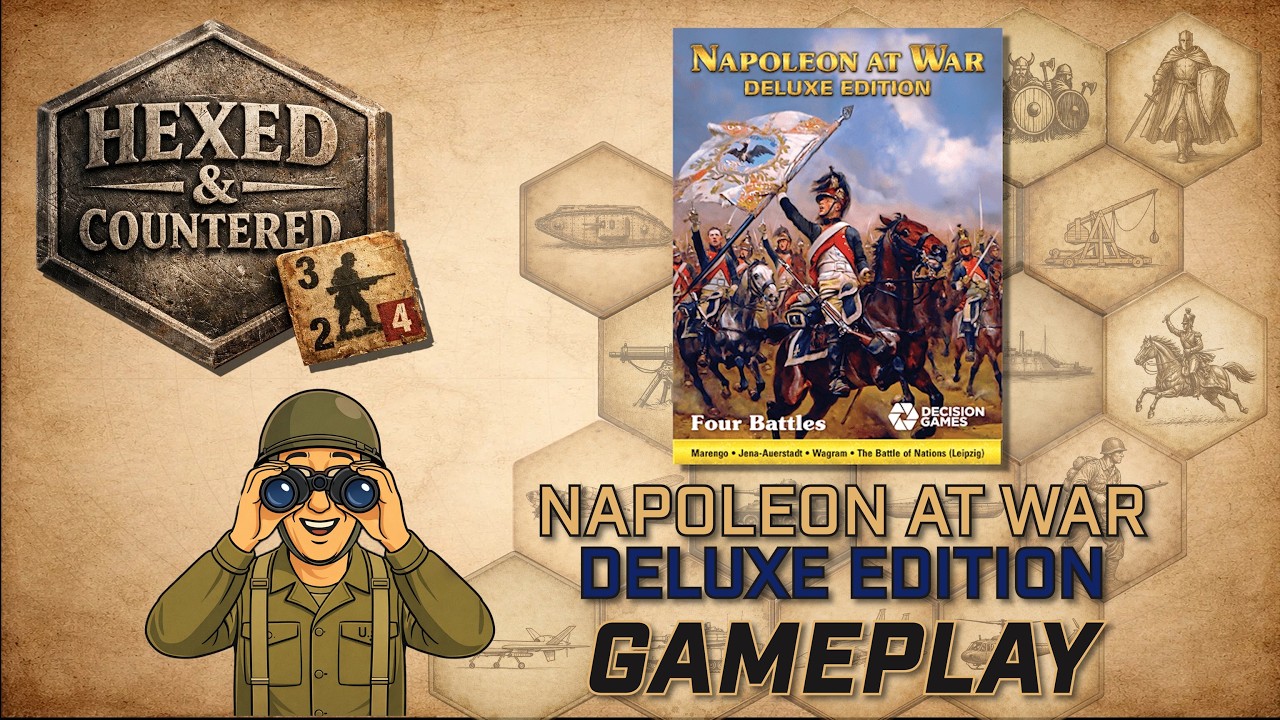
  • Napoleon at War: Deluxe Edition (Decision Games) — Marengo

    Napoleon at War: Deluxe Edition (Decision Games) — Marengo

    Marengo is one of history’s great near-run things. On the morning of 14 June 1800, Napoleon had badly misjudged the Austrians and spent most of the day losing; by evening, a counterattack turned catastrophe into the victory that secured his hold on France. That kind of swing is exactly what a good battle game wants to capture, and in this one I take Napoleon at War: Deluxe Edition from Decision Games onto the Marengo field.

    A day that turned late

    The interesting design question at Marengo is timing. Get the tempo wrong and you’re simply replaying a defeat; the system has to give the late reinforcements a chance to matter without handing them the day for free. Watching it play out is the best way to judge whether the Deluxe treatment strikes that balance — and whether the classic Napoleonic tension of lines, columns, and cavalry reserves comes through on the table.

    More Napoleonic battles, played through in full. Subscribe to follow the campaign.