Tag: Solitaire

  • Space Infantry: Resurgence Invasion Pack (Lock ‘n Load Publishing) — First Look

    Space Infantry: Resurgence Invasion Pack (Lock ‘n Load Publishing) — First Look

    Sci-fi solo gaming (and all solo gaming in general) lives and dies on whether the system can generate a story without a human opponent, and Space Infantry: Resurgence has built a reputation for doing exactly that. This first look cracks open the Invasion Pack from Lock ‘n Load Publishing to see what you actually get in the box.

    What’s in the box

    The Invasion Pack is a reprint combo that bundles the core game together with its expansion, so there’s a lot of cardboard to dig through. In the core box I go through the rulebook and campaign structure, the mission maps and node systems, the squad rosters, the enemy races, and the deep stack of cards and counters that drive the game. Then it’s on to the expansion, which adds ultra maps, new mission scenarios, and additional hostile types. It’s a generous amount of content for a solitaire title, and the layout gives you a clear sense of how a campaign hangs together.

    Who it’s for

    Space Infantry: Resurgence is squarely a solitaire game (and as a bonus, it can do co-op and competitive as well). You’re running a squad of troopers through mission after mission against an AI-driven galaxy of hostiles, managing risk on the node map and hoping your dice hold. If you like the idea of a self-contained sci-fi campaign you can pull off the shelf and play in an evening, this combo is an easy one to recommend a look at. I’ll reserve judgment on how it plays until it hits the table, but the first impression from the components is a strong one.

    First looks and solo playthroughs post to the channel every week. Subscribe to keep up.

  • Old School Tactical Vol. 5: First to Fight — Scenario 1 Gameplay (Part 1)

    Old School Tactical Vol. 5: First to Fight — Scenario 1 Gameplay (Part 1)

    A first look tells you what’s in the box; a playthrough tells you whether the thing actually works on the table. This is Scenario 1 of Old School Tactical Vol. 5: First to Fight – the Battle for Poland 1939 played solo, and it’s where Flying Pig Games’ tactical system meets the opening days of the war.

    Setting up Scenario 1

    I walk through the rules and the pre-turn setup before the shooting starts, and Poland 1939 brings some specific wrinkles worth slowing down for. Hidden sniper mechanics keep the Polish defender dangerous in a way you can’t quite see, German pioneers lay smoke to screen their advance, and there’s off-board naval bombardment from the battleship Schleswig-Holstein, a nice historical touch that also matters tactically. I take the combat calculations step by step so it’s clear how a firefight resolves rather than just showing the result.

    How it plays solo

    Old School Tactical has always been approachable without being shallow, and that holds up here. Solo, the system runs cleanly once you’ve internalized the sequence of play, and the 1939 material gives you asymmetric problems like a Polish force fighting for time against a German attack with more tools. This is Part 1, with the scenario still developing; Part 2 is where we see how the fight actually turns out. If you’ve been curious whether the Poland expansion is worth it, watching it played is the best way to judge.

    Part 2 picks up right where this leaves off. Subscribe so you don’t miss it.

  • Sensuikan: Japanese Fleet Submarines in WWII (Compass Games) — First Look

    Sensuikan: Japanese Fleet Submarines in WWII (Compass Games) — First Look

    The submarine war in the Pacific is almost always told from the American side, which makes Sensuikan a welcome change of periscope. This one from Compass Games hands you the Imperial Japanese Navy’s submarine arm — a force with excellent boats, capable crews, and a doctrine that too often sent them chasing warships instead of the supply lines that might have mattered more. In this first look I go through the box and the rules so you know what you’re getting into.

    A theater that rewards patience

    Submarine games live and die on tension — the long stalk, the firing solution, and the gut-check decision of whether to shoot and give away your position. A first look is the place to see how the sequence of play, the detection rules, and the campaign structure turn that into something you can run solo on the table. If the system captures the patience-then-panic rhythm of undersea warfare, it earns its spot.

    First looks here lead straight into full playthroughs. Subscribe to see this one dive.

  • The 6: My Favorite World War I Solitaire Wargames

    The 6: My Favorite World War I Solitaire Wargames

    World War I usually takes a backseat to other eras in wargaming, which has always struck me as a missed opportunity. The Great War produces some of the most compelling solo experiences available — the tension, the tragedy, and the tactical problems that have no clean answers. In this countdown I run through my six favorite solitaire WWI games, the ones that keep earning a spot on the table.

    Why the Great War rewards solo play

    The range on offer is wider than people expect. You can spend an hour on a nerve-shredding trench raid, hunt convoys in the cold Atlantic, or fly the sweeping aerial campaigns over the Western Front. Some of these are quick, self-contained puzzles; others are career-spanning narratives where you sweat every replacement and every roll on the wound table. That spread — from tight one-session games to long, personal campaigns — is exactly why the era suits solitaire so well.

    I’m not going to spoil the order here — the full ranking, with what each game does well and who it’s for, is in the video. If you’ve been sleeping on WWI as a solo subject, start with number one and work backwards; I don’t think you’ll be disappointed. And if your own list looks different, that’s half the fun — tell me what I got wrong.

    Want more of the era? There’s a longer look at the period on the site in In the Trenches: Devil Dogs.

    Countdowns, first looks, and full solo playthroughs land on the channel every week. Subscribe to keep up.

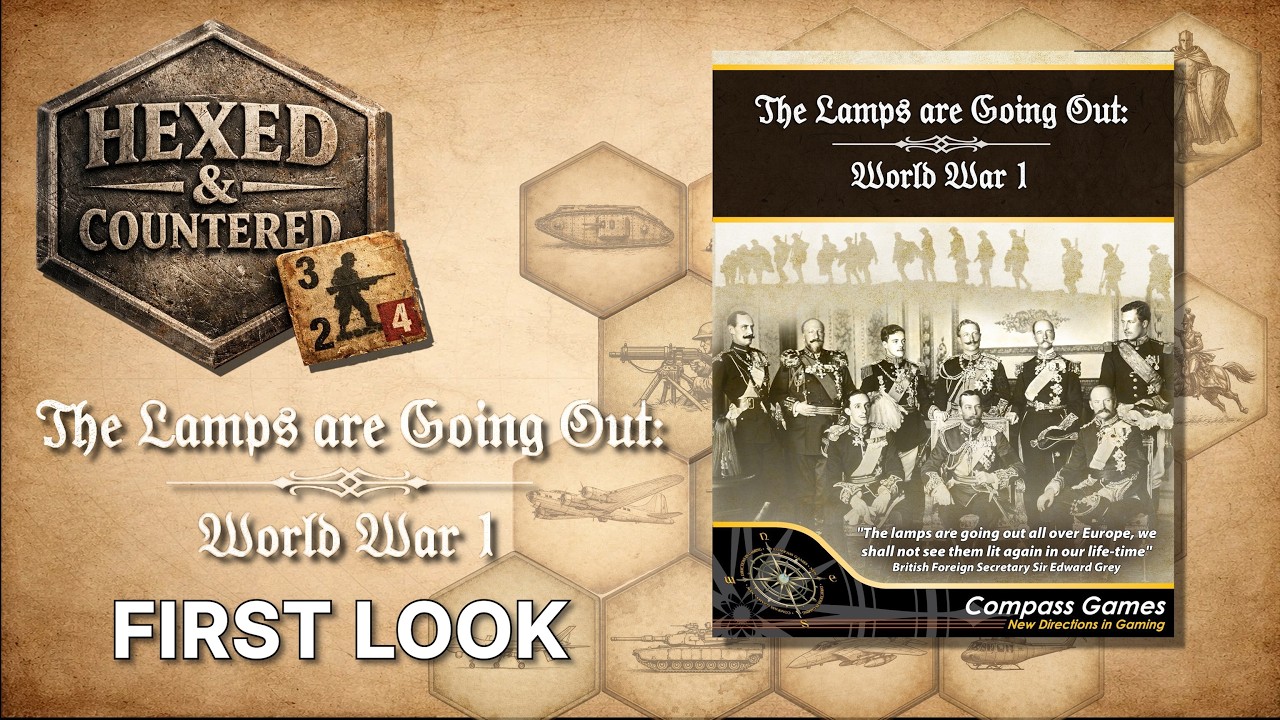
  • The Lamps Are Going Out (Compass Games) — First Look

    The Lamps Are Going Out (Compass Games) — First Look

    The title comes from Sir Edward Grey on the eve of war — “the lamps are going out all over Europe” — and Compass Games’ The Lamps Are Going Out sets out to put that whole catastrophe in your hands. It’s a card-driven, solitaire-friendly treatment of the entire First World War, and in this first look I go through the map, the cards, and the flow of a turn.

    Grand strategy you can run alone

    What makes this one interesting is how it compresses four years of grand strategy — multiple fronts, the home fronts, technology, and the ever-present pressure of national will — into something a single player can actually manage in an evening or two. Card-driven systems are well suited to that job: the deck paces the war, throws events at you, and forces hard choices about where to spend a finite hand. A first look is the right place to see whether that machinery clicks before you commit to a full campaign.

    Gameplay follows this overview, so if the system appeals, subscribe and follow the war as it unfolds on the table.

    Solitaire-friendly first looks and playthroughs, several times a week. Subscribe to follow along.

  • No More Paperwork: A Solo App for Classic Traveller

    No More Paperwork: A Solo App for Classic Traveller

    Solo Traveller has a well-earned reputation, and so does its paperwork. Between world generation, encounter tables, trade runs, and tracking a crew’s worth of skills and gear, a good session can spend as much time on the ledger as on the adventure. That’s the itch I’ve been trying to scratch with a small solo app — and in this video I walk through the beta.

    Keep the game, lose the bookkeeping

    The goal isn’t to replace the referee in your head — that’s the best part of solo play. It’s to take the mechanical drag off the table: the rolls, the lookups, and the record-keeping that slow a session to a crawl. Handle those quickly and cleanly, and the decisions that actually matter get room to breathe.

    It’s very much a beta, and I’d rather show it warts-and-all than sit on it until it’s “perfect.” If you play solo Traveller, the video is the fastest way to see what it does and where it’s headed. Feedback from people who actually run these campaigns is exactly what shapes where it goes next — so if you have thoughts, I want to hear them.

    Building tools for solo gamers is part of what this channel is about. Subscribe to follow the app’s progress.

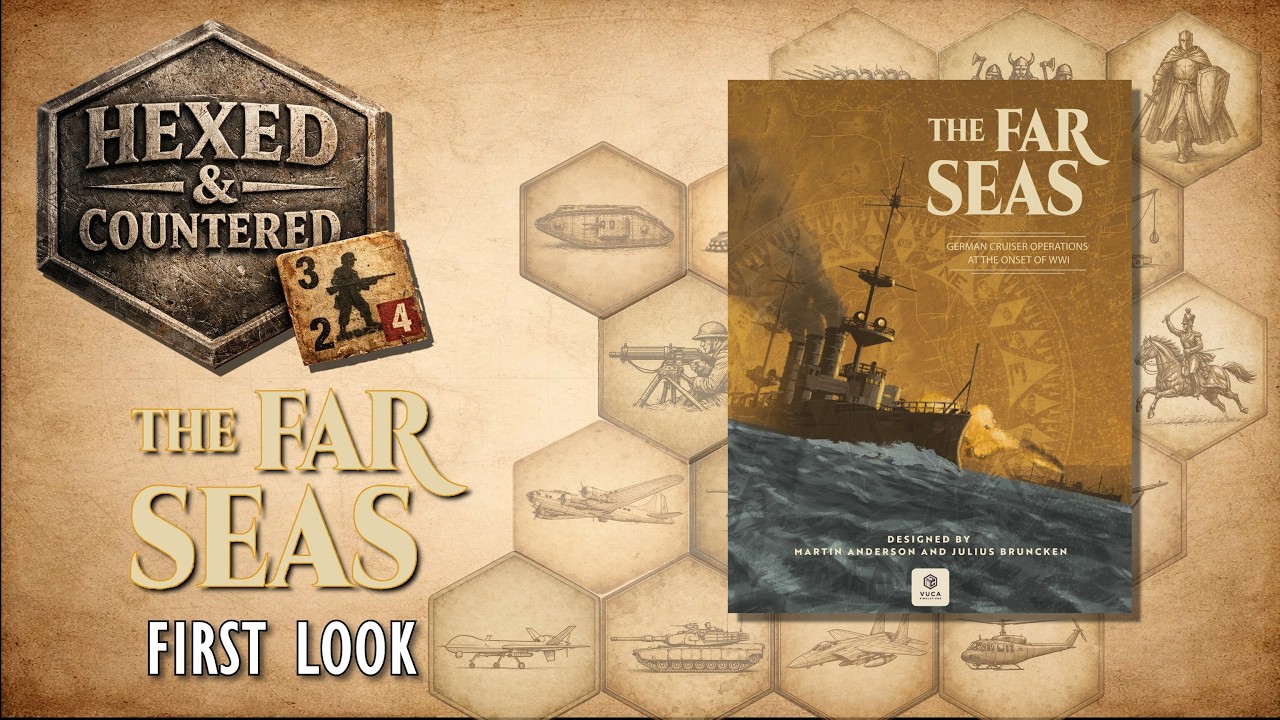
  • The Far Seas (Vuca Simulations) — First Look

    The Far Seas (Vuca Simulations) — First Look

    When war broke out in 1914, Germany had a squadron of modern cruisers on the far side of the world under Admiral Graf von Spee, with no way home and every reason to make trouble. The Far Seas, designed by Martin Anderson and Julius Brunken for Vuca Simulations, turns that opening chapter of the naval war into a solo-friendly game of raiding and pursuit. In this first look I open the box and walk the system.

    A raider’s problem

    Commerce raiding is a wonderful subject for solo play because the tension is baked in: a cruiser at large is powerful but fragile, hunted by a Royal Navy that can afford to lose ships in a way you cannot. The game hangs on coaling, intelligence, and knowing when a prize is worth the risk of being pinned down. The components look excellent, and the design offers several solitaire approaches — this first look covers the sequence of play, combat, and how the hunt comes together.

    A two-part solo playthrough follows this overview. Subscribe to sail with the squadron.

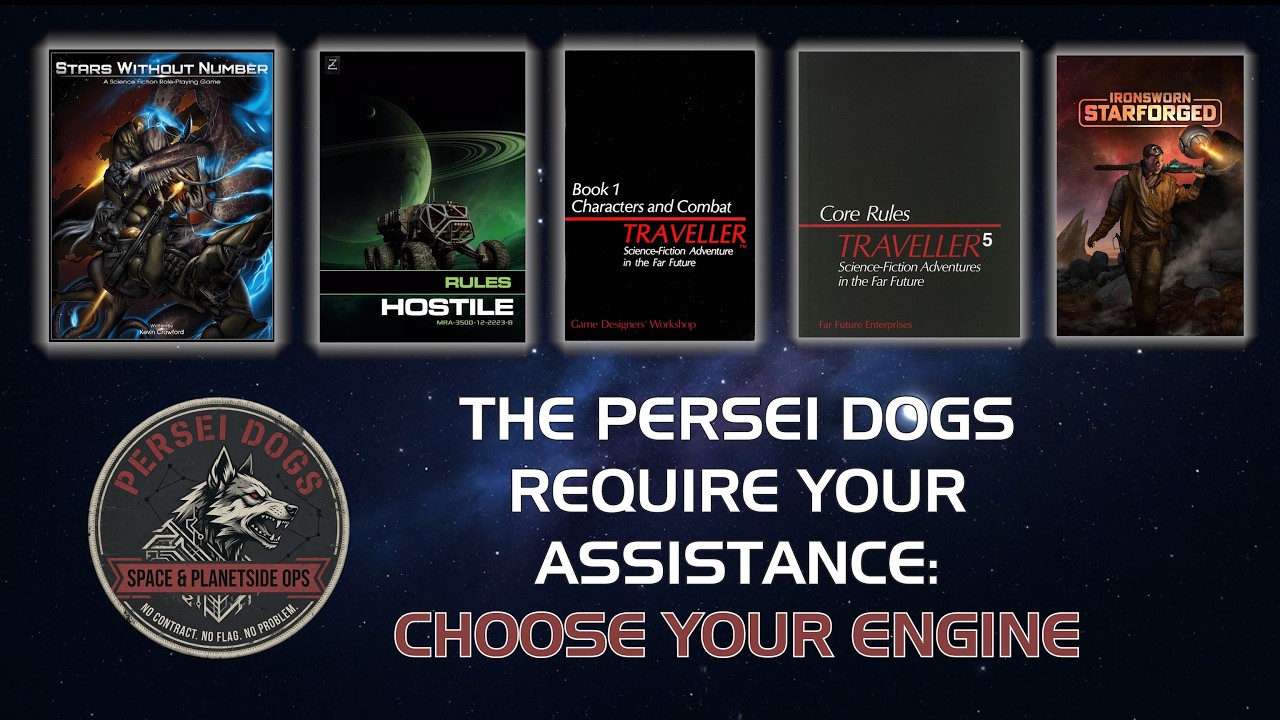
  • Picking a Sci-Fi RPG Engine: Traveller, Hostile, Stars Without Number, or Ironsworn: Starforged

    Picking a Sci-Fi RPG Engine: Traveller, Hostile, Stars Without Number, or Ironsworn: Starforged

    I want to run a sci-fi campaign for the channel, and the modern hobby is spoiled for good engines to run it on. So rather than just pick one, I laid out four contenders and put it to a vote. Each of these could carry a long-running campaign; they just get there in completely different ways.

    The four contenders

    • Traveller — the 1977 granddaddy of sci-fi RPGs. Grounded, career-driven, and built for exactly the kind of hard-edged spacefaring sandbox I keep coming back to.
    • Hostile (Zozer Games) — a blue-collar, “used future” setting in the Alien mold, running on a Cepheus/Traveller-compatible chassis. Grim, atmospheric, and perfect for survival-horror in the dark between stars.
    • Stars Without Number (Sine Nomine) — an OSR sci-fi toolkit loaded with sandbox generators. Half rulebook, half sector-building machine, and famously friendly to solo and referee-less play.
    • Ironsworn: Starforged — a PbtA-descended engine designed from the ground up for solo and co-op play, where the oracles and moves do the heavy narrative lifting.

    The honest truth is I’d be happy running any of them — but they’d produce very different shows. Traveller and Hostile lean into simulation and consequence; Starforged leans into emergent story; Stars Without Number sits comfortably between. Watch the rundown, then tell me where to point the ship.

    The winning engine becomes a full solo campaign on the channel. Subscribe so you don’t miss session one.

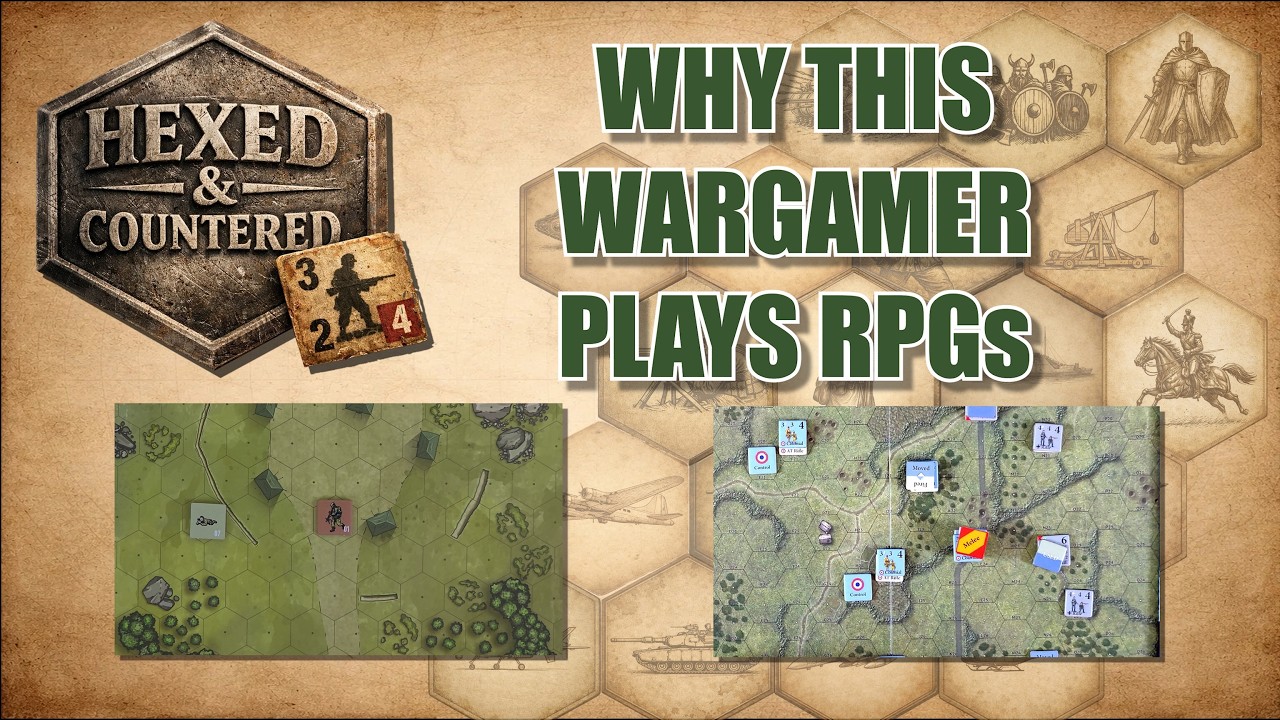
  • Why This Wargamer Plays RPGs (and Why You Might, Too)

    Why This Wargamer Plays RPGs (and Why You Might, Too)

    After forty-odd years of pushing cardboard counters across hex maps, I didn’t expect roleplaying games to grab me the way they have. But the longer I play, the clearer the throughline gets. The things that make a great wargame — meaningful decisions, real consequences, and a system that models something true — are exactly what a good RPG delivers. It’s just pointed at people instead of armies.

    Same instincts, different scale

    Wargaming trains you to read a situation: weigh the odds, spot the decisive point, and accept that a plan only survives until contact. An RPG asks a smaller, sharper version of the same question — not “where does the division attack,” but “what does this person do next, and what does it cost them.” If you already think in terms of tempo, risk, and consequence, you’re most of the way there.

    Solo play is the bridge

    I came to RPGs the way a lot of wargamers do: through solo play. A solo session of Traveller or Twilight: 2000 scratches the same itch as a solo wargame. You set the situation, the system pushes back, and the story falls out of decisions made under pressure. No group to schedule, no table to referee — just you, the rules, and the dice telling you how badly your clever idea went.

    The systems I keep returning to lean tactical for exactly that reason. Traveller and Twilight: 2000 reward planning, logistics, and knowing when a fight isn’t worth having. Those are grognard instincts, and they translate cleanly.

    If you’ve been wargaming for years and quietly told yourself RPGs “aren’t for you,” this is the video where I make the case that they might be. Give it a watch, then come argue with me.

    Hexed & Countered covers solo-friendly wargames and RPGs — first looks, full playthroughs, and campaign journals, several times a week.

  • Review: Carrier Battle: Philippine Sea

    Review: Carrier Battle: Philippine Sea

    A SOLITAIRE WARGAME Direct Hit


    Carrier Battle: Philippine Sea is a fantastic solitaire wargame that offers a challenging and immersive gameplay experience. Designed by Jon Southard, this game is a sequel to the venerable & popular Carrier from Victory Games which was released back in 1990, but with a focus on the historic battle of the Philippine Sea. One of the strengths of the game is how it breaks down its mechanics into manageable pieces through programmed learning, making it accessible for players to learn and master.

    The game’s scenario booklet provides a tutorial-style approach, with the first five scenarios serving as tutorials that introduce players to different aspects of the game mechanics. For example, in scenario one, players learn the rules of air-to-air combat through an interception of incoming Japanese planes by US fighter planes. This approach of breaking down the core mechanics into separate scenarios makes it easier to understand and learn the game as a whole.

    One of the core mechanics of the game is carrier flight deck operations, which is covered in scenario three. Managing the carriers correctly, including ensuring the right aircraft are on deck and ready for launch, becomes crucial for success in the game. Players need to carefully plan and execute their carrier operations, as the enemy attacks in waves and can cause damage or loss to the carriers if not managed effectively. This adds depth and strategy to the gameplay, making it engaging and challenging.

    Search and location of enemy task forces are also important aspects of the game, as covered in scenario four. The game provides different levels of intelligence on enemy forces, and players need to carefully plan their search and detection strategies to locate and engage the enemy effectively. This adds a layer of realism and decision-making to the gameplay, keeping players engaged and strategizing throughout the game.

    The rule book of the game may be lengthy, but the game’s mechanics are reasonably straightforward and easy to understand. The programmed learning approach used in the tutorial scenarios helps players grasp the different aspects of the game gradually, making it accessible to both experienced wargamers and newcomers to the genre.

    The post-tutorial scenarios offered in the game include individual scenarios for both days of the battles, a full-on two-day scenario and an alternate history offering called the “Great Battle of the Pacific” that includes ships that had been sunk in earlier fighting and also boosts the performance of the Japanese aircrew, which had by this time been severely diminished in skill due to pilot losses. The game also features a detailed and immersive setup of enemy forces, Butai displays, and management of Japanese carriers, adding depth and complexity to the gameplay.

    The game also includes US submarines, which played a vital role in the battle as well as rules for surface battles – part of the American Task Force 58 included Task Group 58.7 which was the battle line group and featured iconic ships such as the USS Iowa, while the Japanese forces included the Yamato, the largest battleship in the world.

    In summary, Carrier Battle: Philippine Sea is a well-designed solitaire wargame that offers a challenging and immersive experience. The programmed learning approach, manageable pieces of mechanics, and strategic depth make it enjoyable to play and learn. Whether you are a seasoned wargamer or new to the genre, this game is a must-try for any fan of tabletop wargames.

    Featured Videos

    Video content for Carrier Battle: Philippine Sea from the Hexed & Countered YouTube channel.