Tag: World War I

  • World War I: Deluxe Edition (Decision Games) — Gameplay (Part 1)

    World War I: Deluxe Edition (Decision Games) — Gameplay (Part 1)

    After the first look, the real question with any strategic-level wargame is how the first turn feels, and in World War I: Deluxe Edition from Decision Games, the first turn is 1914, with all the weight that carries. This is Part 1 of the playthrough.

    The whole war, from turn one

    The Deluxe Edition covers the entire Great War at a strategic level, and I start with a full top-to-bottom look at the map so the geography makes sense before any units move. From there it’s into the summer impulse phases of 1914: the German invasion of Belgium, the thin but critical Eastern Front, and the mobilization of the Balkan states. Even this early, the game is asking real questions: where to commit, when to accept a risky combat differential, and how to spend mobilization points that never quite stretch far enough.

    Early impressions in play

    What comes through in Part 1 is how much the opening moves shape everything after. The decisions aren’t flashy, but they’re consequential, and the system does a good job of making 1914 feel like a genuine fork in the road rather than a scripted opening. If you want the components-and-rules overview first, I covered that in the first look. This is the game in motion, heading toward the winter of 1914 and the hard choices waiting there.

    The campaign continues in future parts. Subscribe to follow it through the war.

  • The Lamps Are Going Out — World War I (Compass Games) — Gameplay

    The Lamps Are Going Out — World War I (Compass Games) — Gameplay

    Grand-strategic World War I games ask you to hold the whole continent in your head at once, and The Lamps Are Going Out (designed by Kirk Uhlmann and published by Compass Games) is one of the more ambitious takes on that idea. This episode walks through the opening turns of 1914.

    1914 and the plans that shaped it

    The playthrough opens with the historical framing the game leans on: the German Schlieffen Plan and the French Plan 17, both of which the system models rather than just references. I go through the map and its production centers, the seasonal turn structure, and the core mechanics of movement, naval blockade, and ground combat. Event cards (like First-Line Formations) add texture to each turn, and production points are the currency that fuels the whole war effort.

    Blockade, the Big Push, and playing it solo

    Two things stand out early. The naval side is more than set dressing; the North Sea blockade and the naval combat give the Allies a slow, grinding lever to pull. And ground combat, resolved through “The Big Push” and its dice-off, captures the costly, incremental nature of the fighting without drowning you in detail. The German forces push into Belgium while the Western Allies attempt a mandatory and genuinely awkward counter-offensive in the Rhine. Solo, it’s a lot to track at first, but the structure is logical once it clicks, and Part 1 lays the groundwork for the campaign to come.

    The war unfolds across the playthrough series. Subscribe to see where it goes.

  • The 6: My Favorite World War I Solitaire Wargames

    The 6: My Favorite World War I Solitaire Wargames

    World War I usually takes a backseat to other eras in wargaming, which has always struck me as a missed opportunity. The Great War produces some of the most compelling solo experiences available — the tension, the tragedy, and the tactical problems that have no clean answers. In this countdown I run through my six favorite solitaire WWI games, the ones that keep earning a spot on the table.

    Why the Great War rewards solo play

    The range on offer is wider than people expect. You can spend an hour on a nerve-shredding trench raid, hunt convoys in the cold Atlantic, or fly the sweeping aerial campaigns over the Western Front. Some of these are quick, self-contained puzzles; others are career-spanning narratives where you sweat every replacement and every roll on the wound table. That spread — from tight one-session games to long, personal campaigns — is exactly why the era suits solitaire so well.

    I’m not going to spoil the order here — the full ranking, with what each game does well and who it’s for, is in the video. If you’ve been sleeping on WWI as a solo subject, start with number one and work backwards; I don’t think you’ll be disappointed. And if your own list looks different, that’s half the fun — tell me what I got wrong.

    Want more of the era? There’s a longer look at the period on the site in In the Trenches: Devil Dogs.

    Countdowns, first looks, and full solo playthroughs land on the channel every week. Subscribe to keep up.

  • World War I: Deluxe Edition (Decision Games) — First Look

    World War I: Deluxe Edition (Decision Games) — First Look

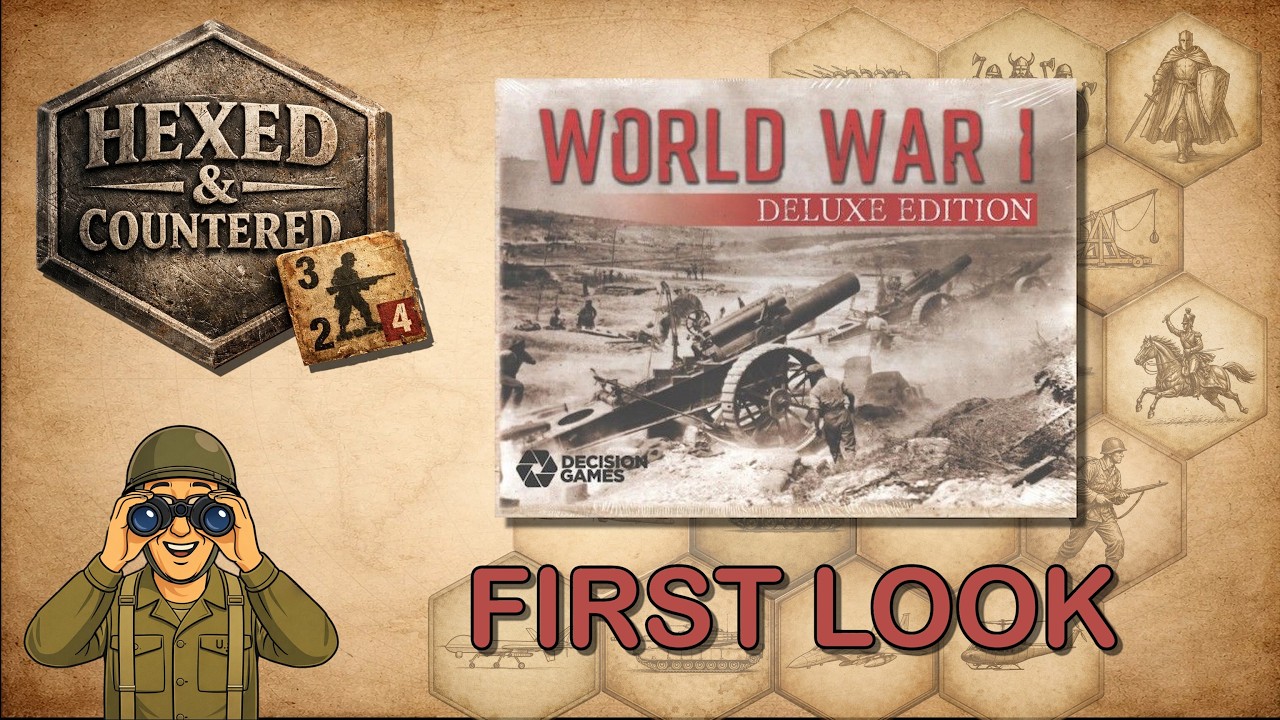
    Putting the whole of World War I into a single boxed wargame is an ambitious ask, and World War I: Deluxe Edition from Decision Games sets out to do exactly that — the entire war, from the opening offensives to the final collapse, on one strategic map. In this first look I open the box, walk the components, and cover the rules well enough that you’ll know whether it’s a system you want to spend time with.

    The whole war in one box

    Strategic-level treatments of the Great War live or die on how they handle the things that actually decided it — the grinding stalemate of the Western Front, the wider war in the east and south, and the slow arithmetic of attrition and supply. A first look is the place to see how the map, the counters, and the sequence of play frame those problems, and whether the design keeps them legible without drowning you in chrome.

    This is the opening of a series — gameplay follows, where the system gets tested where it counts, on the table. Watch the first look for the overview, then follow along as the war plays out.

    First looks here always lead into full playthroughs. Subscribe to see how this one holds up in play.

  • The Lamps Are Going Out (Compass Games) — First Look

    The Lamps Are Going Out (Compass Games) — First Look

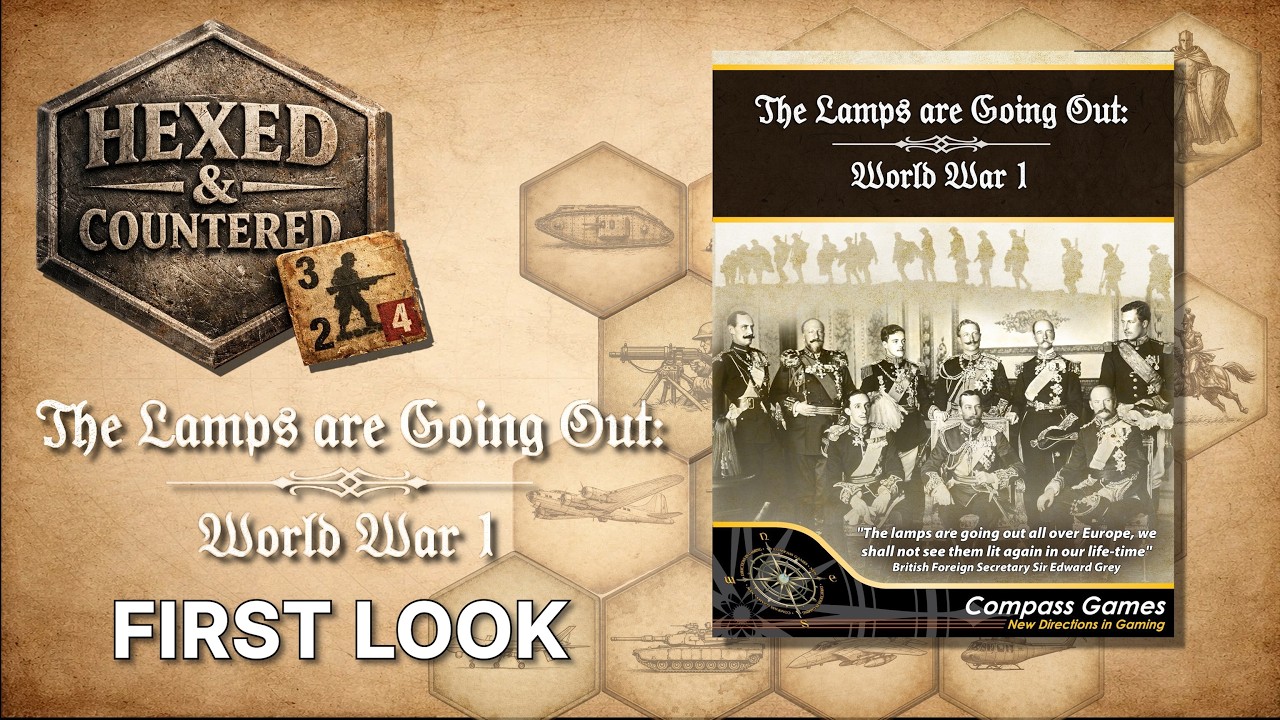
    The title comes from Sir Edward Grey on the eve of war — “the lamps are going out all over Europe” — and Compass Games’ The Lamps Are Going Out sets out to put that whole catastrophe in your hands. It’s a card-driven, solitaire-friendly treatment of the entire First World War, and in this first look I go through the map, the cards, and the flow of a turn.

    Grand strategy you can run alone

    What makes this one interesting is how it compresses four years of grand strategy — multiple fronts, the home fronts, technology, and the ever-present pressure of national will — into something a single player can actually manage in an evening or two. Card-driven systems are well suited to that job: the deck paces the war, throws events at you, and forces hard choices about where to spend a finite hand. A first look is the right place to see whether that machinery clicks before you commit to a full campaign.

    Gameplay follows this overview, so if the system appeals, subscribe and follow the war as it unfolds on the table.

    Solitaire-friendly first looks and playthroughs, several times a week. Subscribe to follow along.

  • Tankschlacht: Cambrai 1917 (Revolution Games) — First Look

    Tankschlacht: Cambrai 1917 (Revolution Games) — First Look

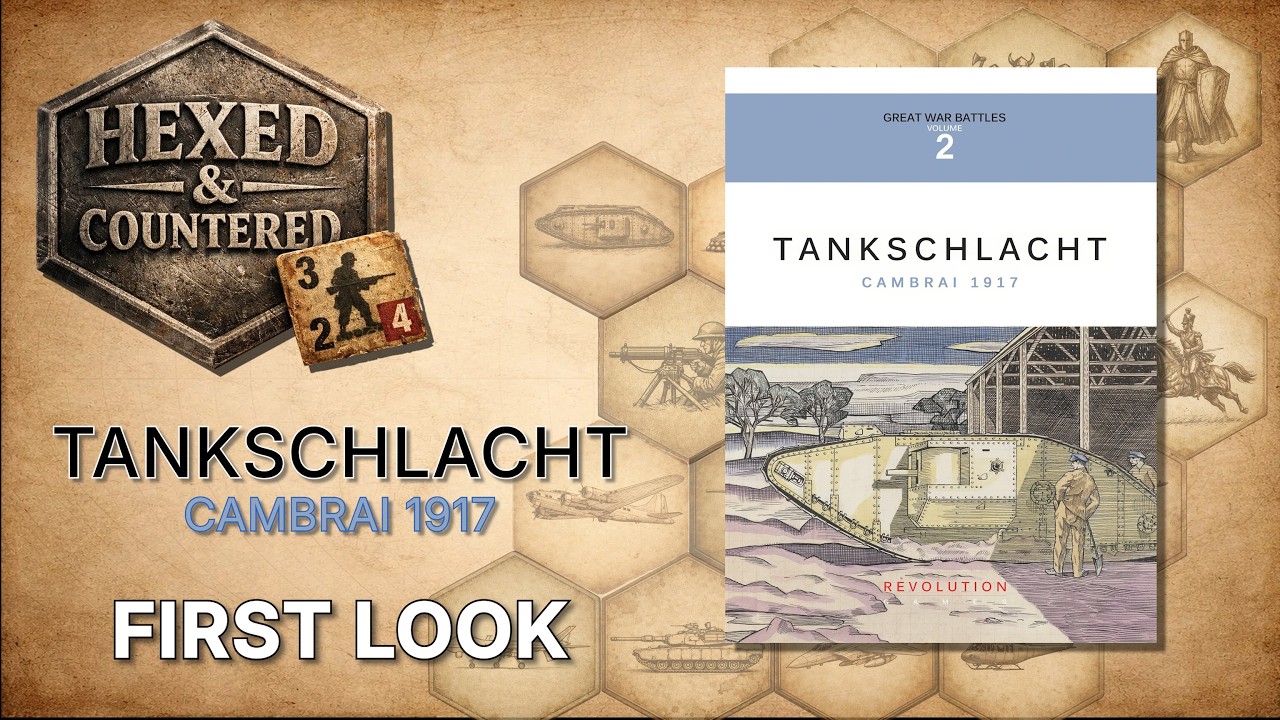
    Cambrai in November 1917 is where the tank stopped being a curiosity and started being a weapon — the first massed armored assault in history, and a preview of the way wars would be fought for the next century. Tankschlacht from Revolution Games takes on that moment, and in this first look I walk through the components and the system before diving into the gameplay series.

    The birth of combined arms

    What makes Cambrai interesting on the table is the same thing that made it interesting in 1917: tanks alone don’t win, and infantry alone can’t keep up. A good treatment forces you to coordinate the two, manage the mechanical unreliability of those early machines, and reckon with the German counterattack that erased much of the initial gain. This first look sets up how the game frames those problems; the playthroughs put them to the test.

    The full Cambrai gameplay series continues on the channel. Subscribe to follow the battle.

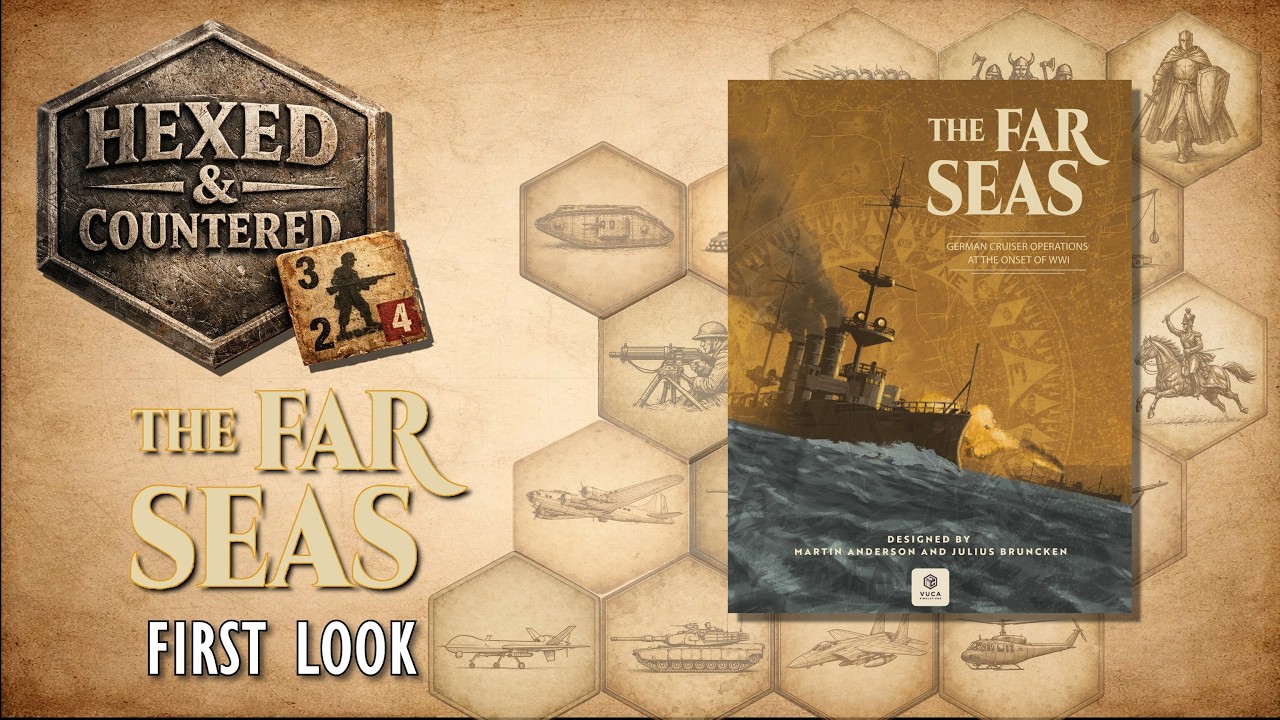
  • The Far Seas (Vuca Simulations) — First Look

    The Far Seas (Vuca Simulations) — First Look

    When war broke out in 1914, Germany had a squadron of modern cruisers on the far side of the world under Admiral Graf von Spee, with no way home and every reason to make trouble. The Far Seas, designed by Martin Anderson and Julius Brunken for Vuca Simulations, turns that opening chapter of the naval war into a solo-friendly game of raiding and pursuit. In this first look I open the box and walk the system.

    A raider’s problem

    Commerce raiding is a wonderful subject for solo play because the tension is baked in: a cruiser at large is powerful but fragile, hunted by a Royal Navy that can afford to lose ships in a way you cannot. The game hangs on coaling, intelligence, and knowing when a prize is worth the risk of being pinned down. The components look excellent, and the design offers several solitaire approaches — this first look covers the sequence of play, combat, and how the hunt comes together.

    A two-part solo playthrough follows this overview. Subscribe to sail with the squadron.

  • In The Trenches: Devil Dogs

    In The Trenches: Devil Dogs

    “RETREAT? HELL, WE JUST GOT HERE!”


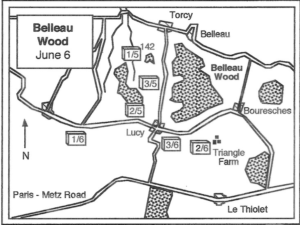
    The famous quote at the top, by Capt. Lloyd Williams, USMC was uttered during the Battle of Belleau Wood where the 5th Marine Regiment, attached to the U.S. Army’s 2nd Division, itself part of the American Expeditionary Force, took on the Kaiser’s Army in the immediate aftermath of the Germans’ 1918 Spring Offensive. The efforts of the 5th and 6th Marine Regiments (collectively the 4th Marine Brigade) in the area of Belleau Wood would add another chapter to the growing legend of the United States Marine Corps. 

    As the debut game in Tiny Battle Publishing’s version of John Gorkowski’s In the Trenches series (previously published by Grenier Games), In the Trenches: Devil Dogs covers the Marines’ efforts against the Kaiser’s crack troops in those battles during June of 1918, fights that caused the Germans to give the Marines the moniker “Teufelhunden” which translates to, you guessed it: Devil Dogs.