Tag: Roleplaying Games

  • No More Paperwork: A Solo App for Classic Traveller

    No More Paperwork: A Solo App for Classic Traveller

    Solo Traveller has a well-earned reputation, and so does its paperwork. Between world generation, encounter tables, trade runs, and tracking a crew’s worth of skills and gear, a good session can spend as much time on the ledger as on the adventure. That’s the itch I’ve been trying to scratch with a small solo app — and in this video I walk through the beta.

    Keep the game, lose the bookkeeping

    The goal isn’t to replace the referee in your head — that’s the best part of solo play. It’s to take the mechanical drag off the table: the rolls, the lookups, and the record-keeping that slow a session to a crawl. Handle those quickly and cleanly, and the decisions that actually matter get room to breathe.

    It’s very much a beta, and I’d rather show it warts-and-all than sit on it until it’s “perfect.” If you play solo Traveller, the video is the fastest way to see what it does and where it’s headed. Feedback from people who actually run these campaigns is exactly what shapes where it goes next — so if you have thoughts, I want to hear them.

    Building tools for solo gamers is part of what this channel is about. Subscribe to follow the app’s progress.
  • Picking a Sci-Fi RPG Engine: Traveller, Hostile, Stars Without Number, or Ironsworn: Starforged

    Picking a Sci-Fi RPG Engine: Traveller, Hostile, Stars Without Number, or Ironsworn: Starforged

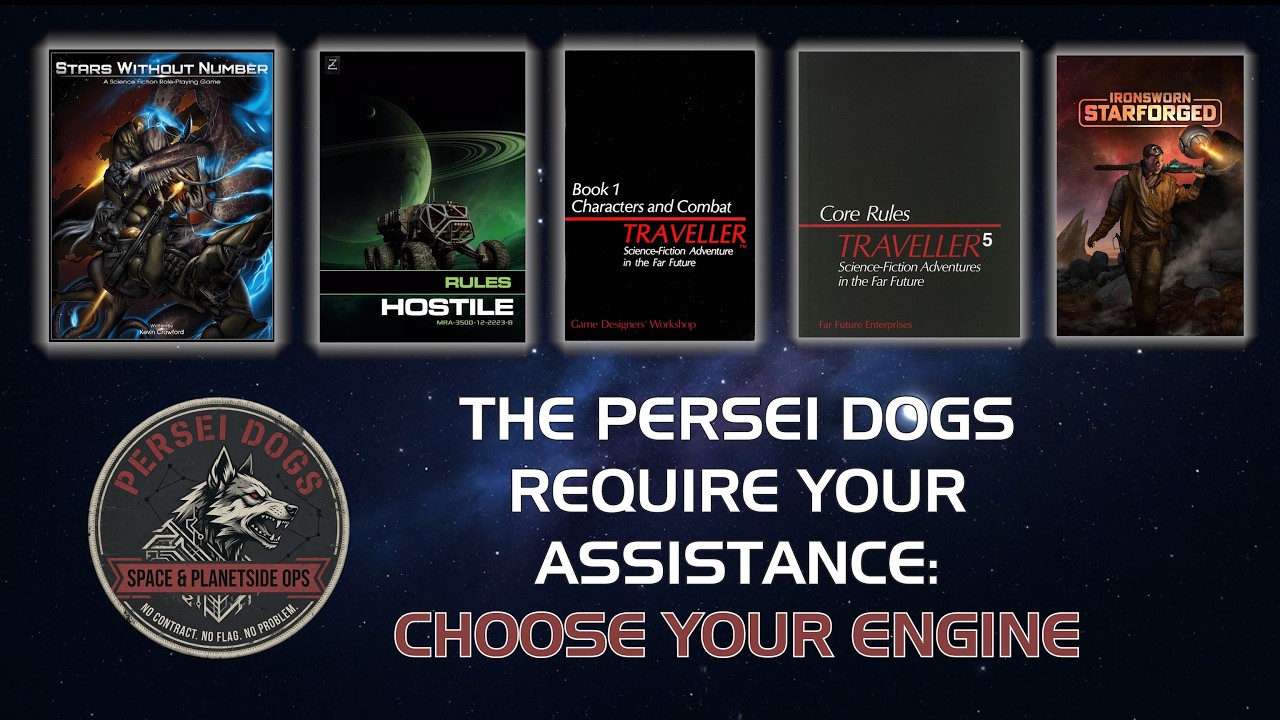
    I want to run a sci-fi campaign for the channel, and the modern hobby is spoiled for good engines to run it on. So rather than just pick one, I laid out four contenders and put it to a vote. Each of these could carry a long-running campaign; they just get there in completely different ways.

    The four contenders

    • Traveller — the 1977 granddaddy of sci-fi RPGs. Grounded, career-driven, and built for exactly the kind of hard-edged spacefaring sandbox I keep coming back to.
    • Hostile (Zozer Games) — a blue-collar, “used future” setting in the Alien mold, running on a Cepheus/Traveller-compatible chassis. Grim, atmospheric, and perfect for survival-horror in the dark between stars.
    • Stars Without Number (Sine Nomine) — an OSR sci-fi toolkit loaded with sandbox generators. Half rulebook, half sector-building machine, and famously friendly to solo and referee-less play.
    • Ironsworn: Starforged — a PbtA-descended engine designed from the ground up for solo and co-op play, where the oracles and moves do the heavy narrative lifting.

    The honest truth is I’d be happy running any of them — but they’d produce very different shows. Traveller and Hostile lean into simulation and consequence; Starforged leans into emergent story; Stars Without Number sits comfortably between. Watch the rundown, then tell me where to point the ship.

    The winning engine becomes a full solo campaign on the channel. Subscribe so you don’t miss session one.

  • Why This Wargamer Plays RPGs (and Why You Might, Too)

    Why This Wargamer Plays RPGs (and Why You Might, Too)

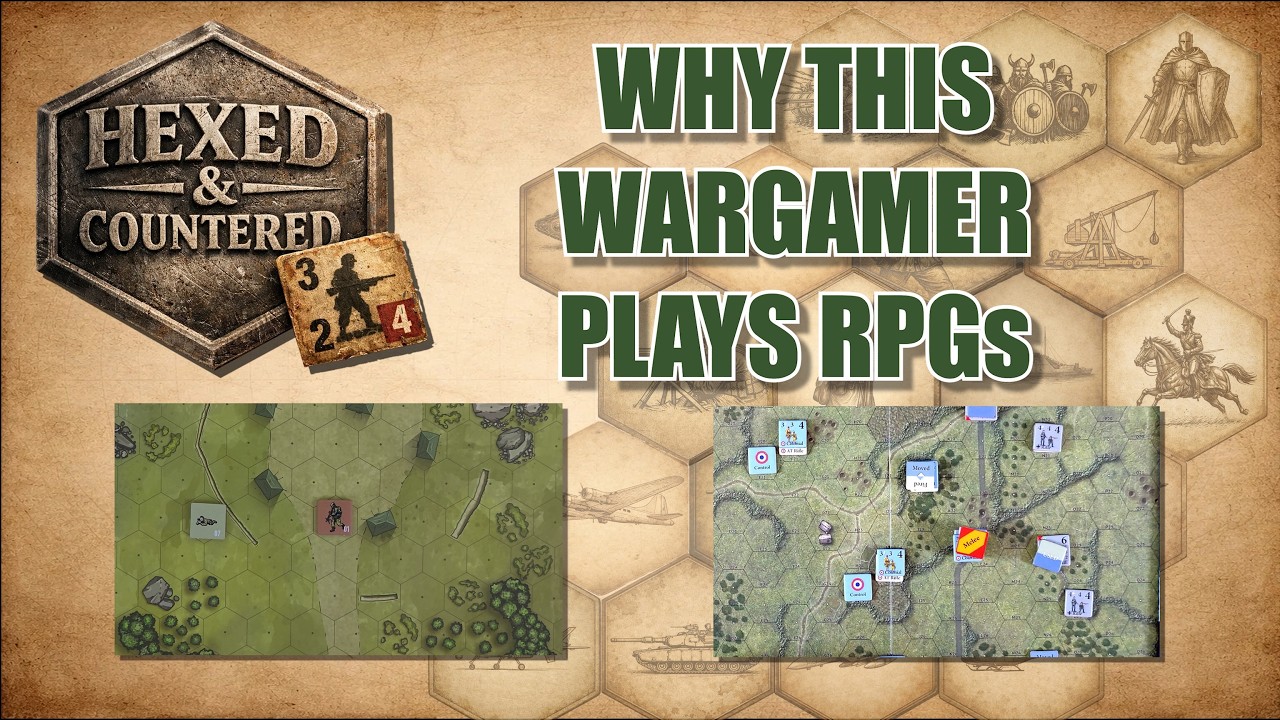
    After forty-odd years of pushing cardboard counters across hex maps, I didn’t expect roleplaying games to grab me the way they have. But the longer I play, the clearer the throughline gets. The things that make a great wargame — meaningful decisions, real consequences, and a system that models something true — are exactly what a good RPG delivers. It’s just pointed at people instead of armies.

    Same instincts, different scale

    Wargaming trains you to read a situation: weigh the odds, spot the decisive point, and accept that a plan only survives until contact. An RPG asks a smaller, sharper version of the same question — not “where does the division attack,” but “what does this person do next, and what does it cost them.” If you already think in terms of tempo, risk, and consequence, you’re most of the way there.

    Solo play is the bridge

    I came to RPGs the way a lot of wargamers do: through solo play. A solo session of Traveller or Twilight: 2000 scratches the same itch as a solo wargame. You set the situation, the system pushes back, and the story falls out of decisions made under pressure. No group to schedule, no table to referee — just you, the rules, and the dice telling you how badly your clever idea went.

    The systems I keep returning to lean tactical for exactly that reason. Traveller and Twilight: 2000 reward planning, logistics, and knowing when a fight isn’t worth having. Those are grognard instincts, and they translate cleanly.

    If you’ve been wargaming for years and quietly told yourself RPGs “aren’t for you,” this is the video where I make the case that they might be. Give it a watch, then come argue with me.

    Hexed & Countered covers solo-friendly wargames and RPGs — first looks, full playthroughs, and campaign journals, several times a week.

  • Classic Traveller and the Little Black Books: Where It All Started

    Classic Traveller and the Little Black Books: Where It All Started

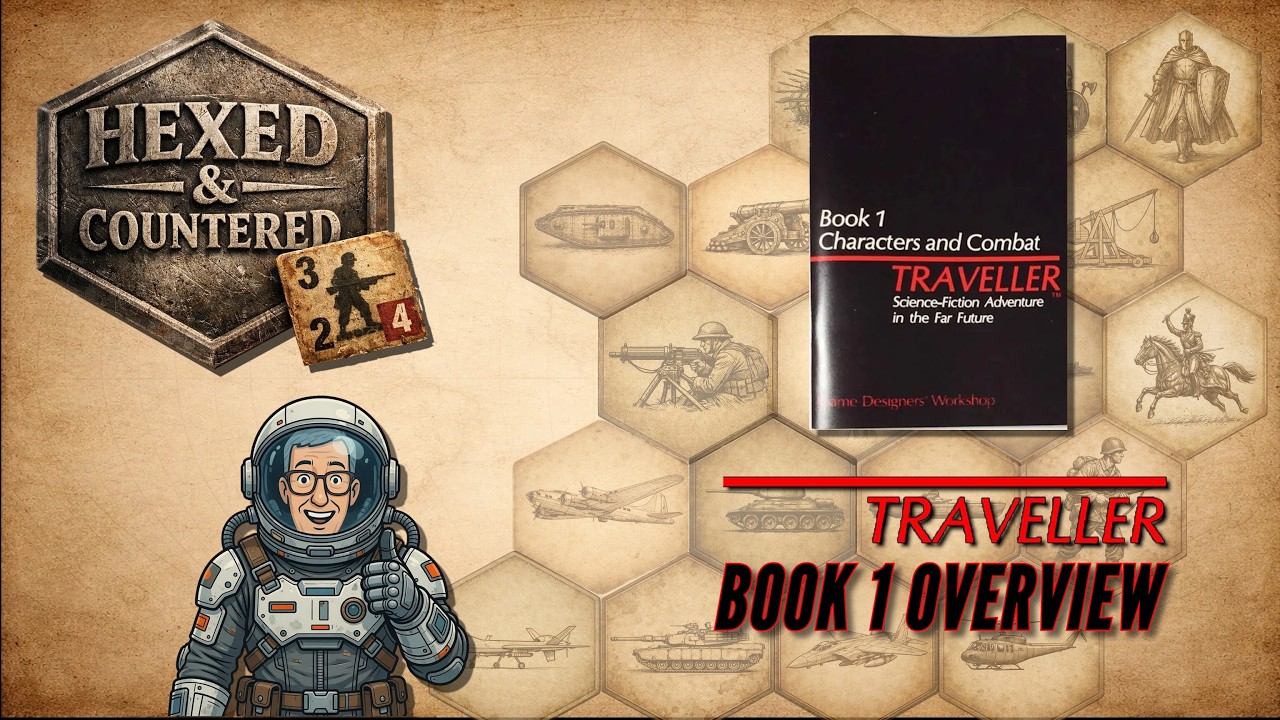
    Before there were splatbooks and boxed sets the size of a footlocker, there were three slim black digest booklets from Game Designers’ Workshop. Published in 1977, Traveller is one of the oldest roleplaying games still in print, and the original “Little Black Books” are where the whole sprawling universe begins. In this one I open Book 1 — Characters and Combat — and look at how much game GDW packed into so few pages.

    A career before the campaign

    Traveller’s character generation is the part everyone remembers, and for good reason. You don’t just roll a spacer — you play out a prior career, term by term, gaining skills, mustering-out benefits, and a personal history before the first session ever starts. In the 1977 rules that history could end early and permanently: fail the wrong roll and your character died in chargen. It sounds brutal, and it is, but it’s also the clearest possible statement of what the game is about. Choices have weight, and the universe doesn’t owe you a happy ending.

    Why it still holds up

    What strikes me going back to Book 1 is how lean and usable it is. The combat is quick, the skill list is tight, and the whole thing assumes an intelligent referee rather than a rule for every situation. For a solo player that’s a feature: the system gets out of the way and lets the situation do the talking. If you’ve only met Traveller through its later, heavier editions, the original booklets are worth the trip back to the source.

    This is the first of an ongoing look at Classic Traveller and the wider GDW library. Subscribe to follow the series.