Tag: First Look

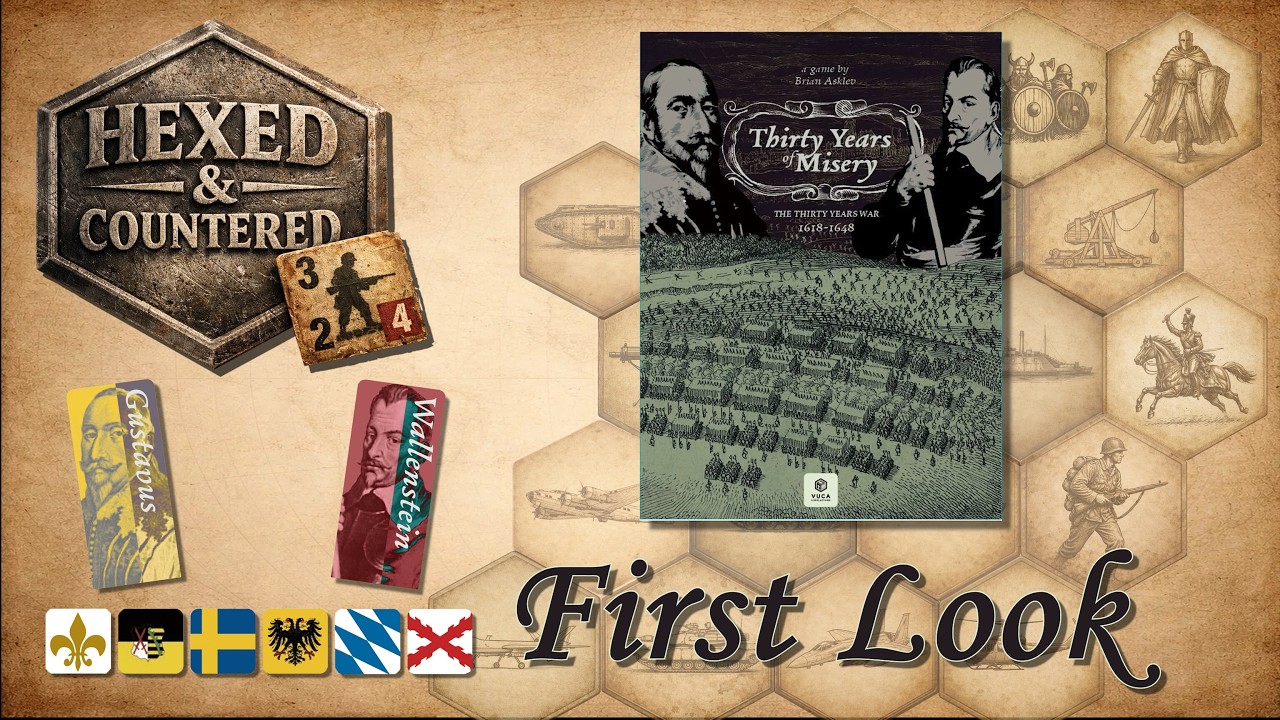
  • Thirty Years of Misery: 1618–1648 (VUCA Simulations) — First Look & Overview

    Thirty Years of Misery: 1618–1648 (VUCA Simulations) — First Look & Overview

    The Thirty Years’ War doesn’t get gamed nearly as often as it should. It’s sprawling, politically tangled, and grimly attritional in a way that scares off a lot of designers, so when a treatment as handsome as Thirty Years of Misery: 1618–1648 lands on the table, it earns a close look. This is designer Brian Asklev’s take, published by VUCA Simulations, and in this video I open the box and walk through what you actually get.

    What’s in the box

    In this first look I go through the components and the box back before committing to a full playthrough. VUCA’s production values are the first thing you notice — the map and counters are up to the standard you’d expect from them. I keep the overview focused on what the game is trying to model and how it presents the sprawl of the war, rather than getting lost in every chart. If you’re weighing whether this belongs on your shelf, the components alone make a strong first impression, but production is never the whole story.

    Is it for you?

    A first look is exactly that — my initial read before the counters start moving. What I want to know with any game on this period is whether it captures the grinding, attritional character of the war without collapsing into pure bookkeeping, and that’s the question I carry into the gameplay videos. I keep the tone honest here: I flag what looks promising and what I’ll be watching for once it hits the table. If the Thirty Years’ War is a period you’ve wanted a good game for, this overview should help you decide whether to dig deeper.

    The playthrough rounds are already up — start there to see it in motion. Subscribe so you don’t miss what’s next.
  • Cuius Regio: The Thirty Years War (GMT Games) — First Look & Overview

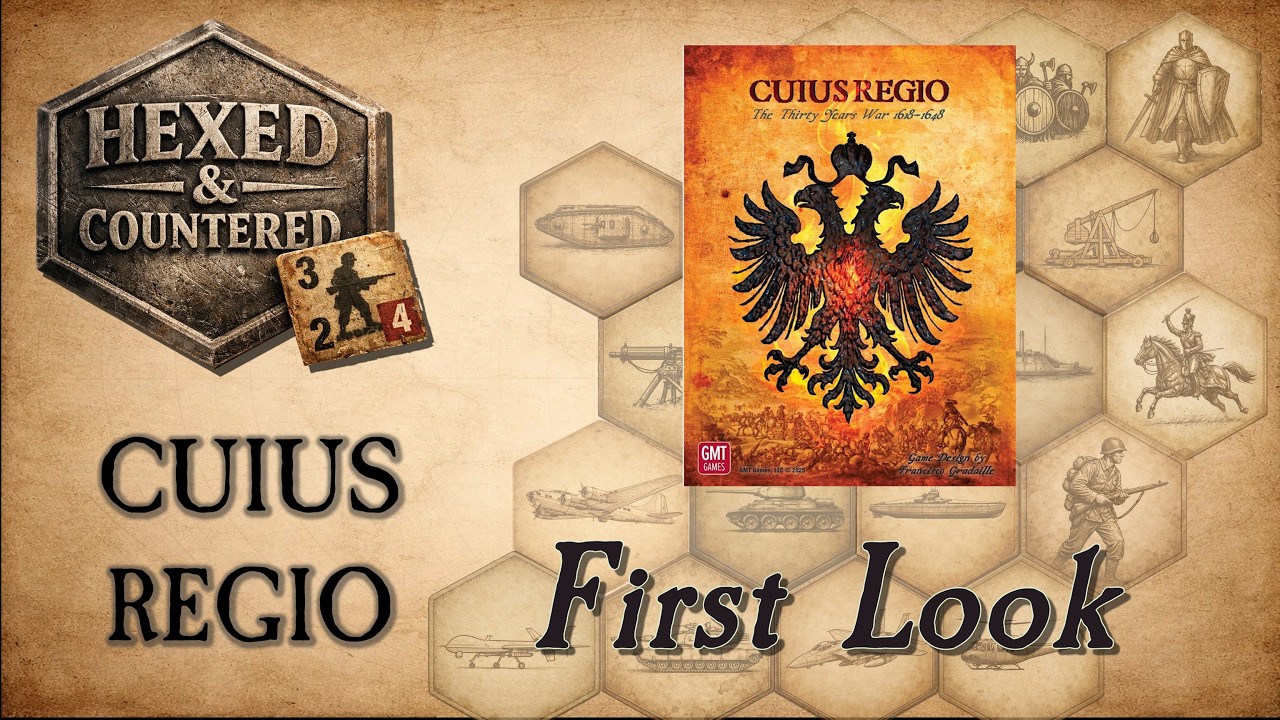
    Cuius Regio: The Thirty Years War (GMT Games) — First Look & Overview

    The Thirty Years’ War is one of the hardest subjects in the hobby to game well — three decades of shifting alliances, religious fracture, and armies that melted away as fast as they were raised. Cuius Regio: The Thirty Years War (1618–1648), designed by Francisco Gradaille for GMT Games, takes it on at the operational level, spread across the whole Holy Roman Empire on a two-map layout. This first look opens the box and walks through what you’re actually signing up for.

    What’s in the box

    There’s a lot here. I work through the rulebook, the scenario book, the player screens and army holding mats, the player aid cards and tables, and the counter sheets before laying out both the northern and southern maps of the Empire. The scenario range is the real story: you can start small with the Bohemian Revolt or commit to the full Grand Campaign, which GMT pegs in the 30-to-40-hour range. That spread means the box has to serve both the player who wants a single evening and the one chasing the whole war, and a first look is where you start to judge whether the components and structure can carry that weight. The presentation is up to GMT’s usual standard, but production is never the whole story — the real test is how the sequence of play, movement, and combat hold up once the counters start moving, and that’s the question I carry into the gameplay videos.

    First looks here always lead into full playthroughs. Subscribe so you don’t miss this one on the table.

  • Space Infantry: Resurgence Invasion Pack (Lock ‘n Load Publishing) — First Look

    Space Infantry: Resurgence Invasion Pack (Lock ‘n Load Publishing) — First Look

    Sci-fi solo gaming (and all solo gaming in general) lives and dies on whether the system can generate a story without a human opponent, and Space Infantry: Resurgence has built a reputation for doing exactly that. This first look cracks open the Invasion Pack from Lock ‘n Load Publishing to see what you actually get in the box.

    What’s in the box

    The Invasion Pack is a reprint combo that bundles the core game together with its expansion, so there’s a lot of cardboard to dig through. In the core box I go through the rulebook and campaign structure, the mission maps and node systems, the squad rosters, the enemy races, and the deep stack of cards and counters that drive the game. Then it’s on to the expansion, which adds ultra maps, new mission scenarios, and additional hostile types. It’s a generous amount of content for a solitaire title, and the layout gives you a clear sense of how a campaign hangs together.

    Who it’s for

    Space Infantry: Resurgence is squarely a solitaire game (and as a bonus, it can do co-op and competitive as well). You’re running a squad of troopers through mission after mission against an AI-driven galaxy of hostiles, managing risk on the node map and hoping your dice hold. If you like the idea of a self-contained sci-fi campaign you can pull off the shelf and play in an evening, this combo is an easy one to recommend a look at. I’ll reserve judgment on how it plays until it hits the table, but the first impression from the components is a strong one.

    First looks and solo playthroughs post to the channel every week. Subscribe to keep up.

  • Sensuikan: Japanese Fleet Submarines in WWII (Compass Games) — First Look

    Sensuikan: Japanese Fleet Submarines in WWII (Compass Games) — First Look

    The submarine war in the Pacific is almost always told from the American side, which makes Sensuikan a welcome change of periscope. This one from Compass Games hands you the Imperial Japanese Navy’s submarine arm — a force with excellent boats, capable crews, and a doctrine that too often sent them chasing warships instead of the supply lines that might have mattered more. In this first look I go through the box and the rules so you know what you’re getting into.

    A theater that rewards patience

    Submarine games live and die on tension — the long stalk, the firing solution, and the gut-check decision of whether to shoot and give away your position. A first look is the place to see how the sequence of play, the detection rules, and the campaign structure turn that into something you can run solo on the table. If the system captures the patience-then-panic rhythm of undersea warfare, it earns its spot.

    First looks here lead straight into full playthroughs. Subscribe to see this one dive.

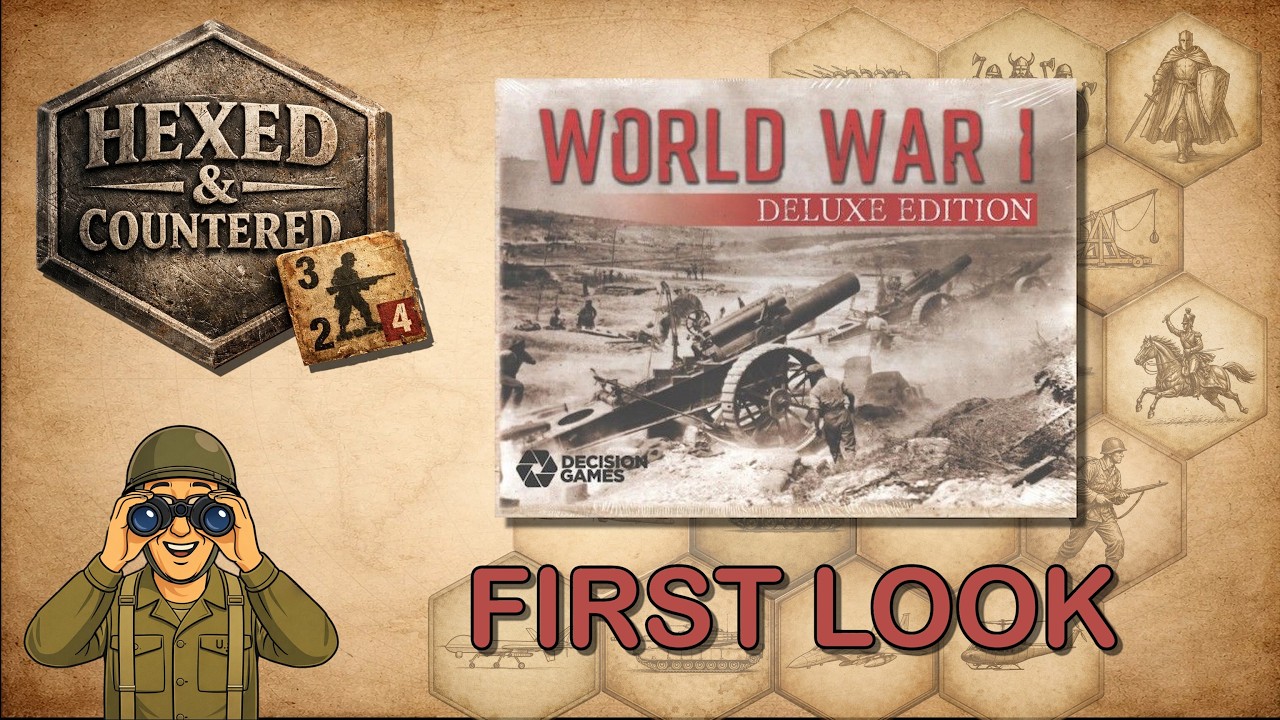
  • World War I: Deluxe Edition (Decision Games) — First Look

    World War I: Deluxe Edition (Decision Games) — First Look

    Putting the whole of World War I into a single boxed wargame is an ambitious ask, and World War I: Deluxe Edition from Decision Games sets out to do exactly that — the entire war, from the opening offensives to the final collapse, on one strategic map. In this first look I open the box, walk the components, and cover the rules well enough that you’ll know whether it’s a system you want to spend time with.

    The whole war in one box

    Strategic-level treatments of the Great War live or die on how they handle the things that actually decided it — the grinding stalemate of the Western Front, the wider war in the east and south, and the slow arithmetic of attrition and supply. A first look is the place to see how the map, the counters, and the sequence of play frame those problems, and whether the design keeps them legible without drowning you in chrome.

    This is the opening of a series — gameplay follows, where the system gets tested where it counts, on the table. Watch the first look for the overview, then follow along as the war plays out.

    First looks here always lead into full playthroughs. Subscribe to see how this one holds up in play.

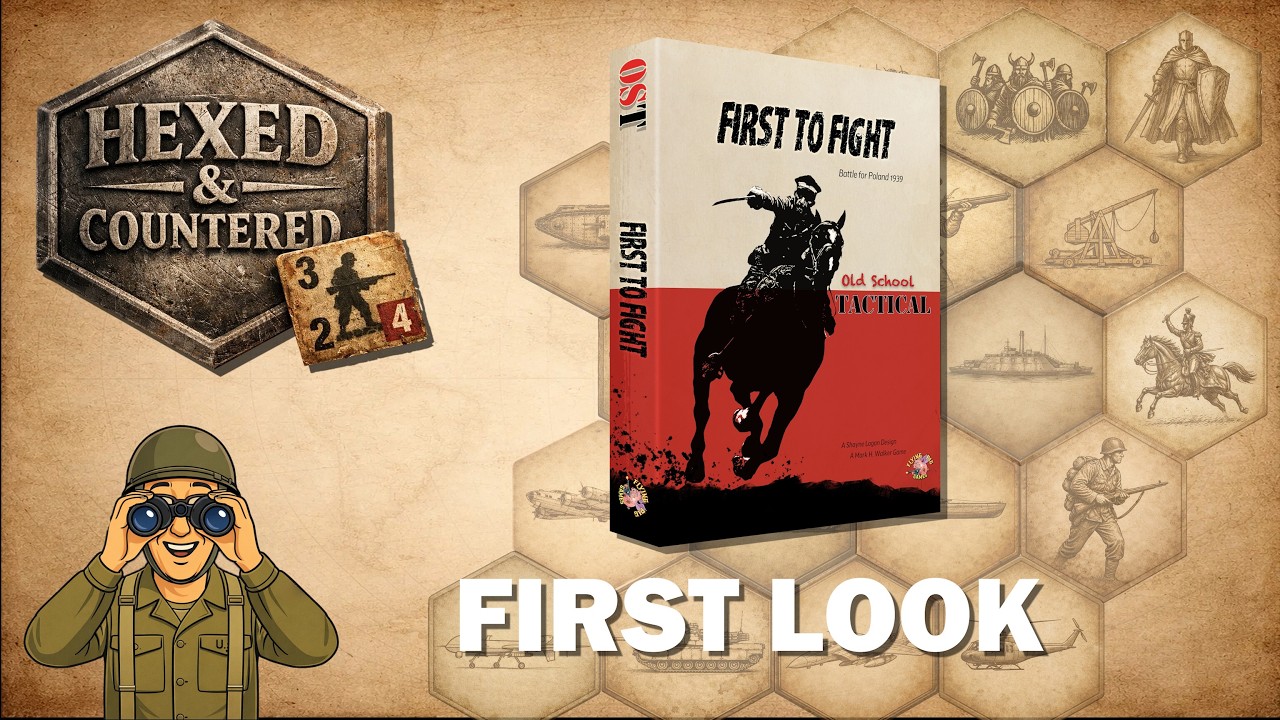
  • Old School Tactical Vol. 5: First to Fight — Battle for Poland 1939 (Flying Pig Games) — First Look

    Old School Tactical Vol. 5: First to Fight — Battle for Poland 1939 (Flying Pig Games) — First Look

    Poland, September 1939, is where the Second World War began and where a lot of wargames never bother to go. Old School Tactical Vol. 5: First to Fight from Flying Pig Games takes the popular tactical system back to the opening campaign, and in this first look I go through the components and what the expansion adds.

    The forgotten opening

    The 1939 campaign is more interesting than its reputation suggests — the Polish army was not the pushover of popular memory, and the early-war mix of tankettes, cavalry, and improvised defense makes for a very different tactical puzzle than the mid-war battles the system usually covers. Old School Tactical is known for being approachable without being shallow, and this first look sets up how the Poland material plays inside that framework.

    Scenario playthroughs follow this overview. Subscribe to see it hit the table.

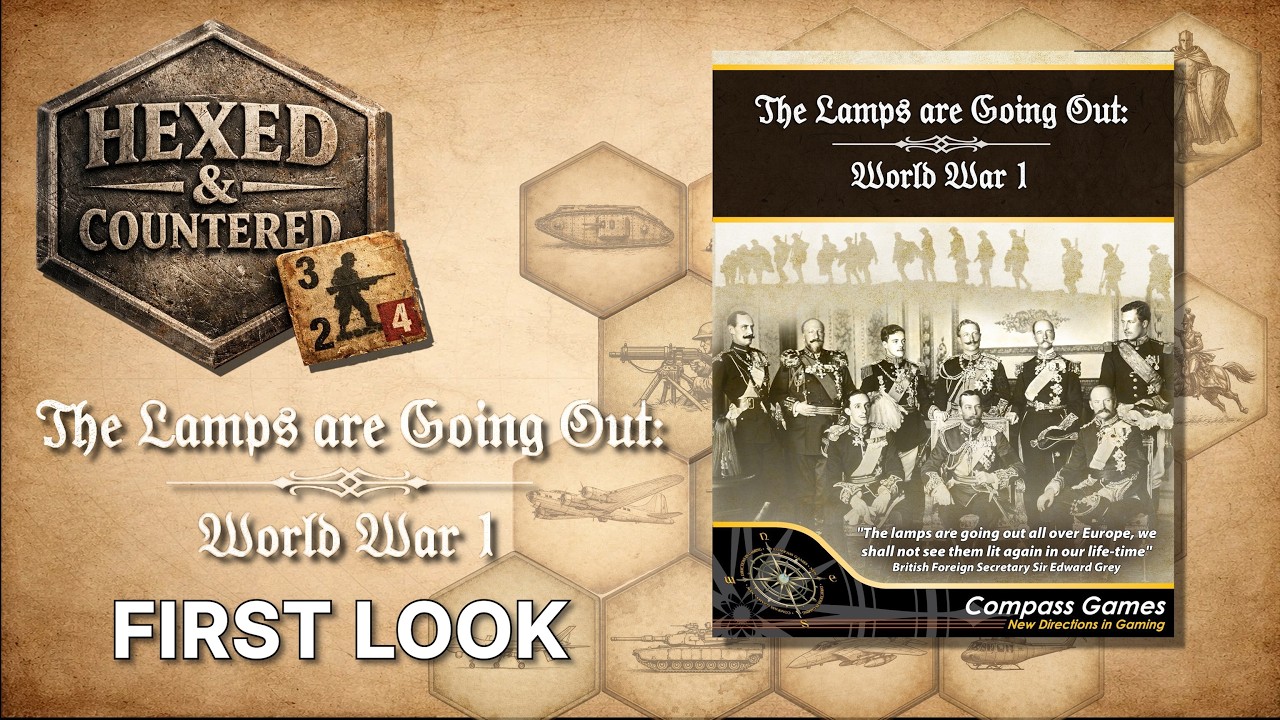
  • The Lamps Are Going Out (Compass Games) — First Look

    The Lamps Are Going Out (Compass Games) — First Look

    The title comes from Sir Edward Grey on the eve of war — “the lamps are going out all over Europe” — and Compass Games’ The Lamps Are Going Out sets out to put that whole catastrophe in your hands. It’s a card-driven, solitaire-friendly treatment of the entire First World War, and in this first look I go through the map, the cards, and the flow of a turn.

    Grand strategy you can run alone

    What makes this one interesting is how it compresses four years of grand strategy — multiple fronts, the home fronts, technology, and the ever-present pressure of national will — into something a single player can actually manage in an evening or two. Card-driven systems are well suited to that job: the deck paces the war, throws events at you, and forces hard choices about where to spend a finite hand. A first look is the right place to see whether that machinery clicks before you commit to a full campaign.

    Gameplay follows this overview, so if the system appeals, subscribe and follow the war as it unfolds on the table.

    Solitaire-friendly first looks and playthroughs, several times a week. Subscribe to follow along.

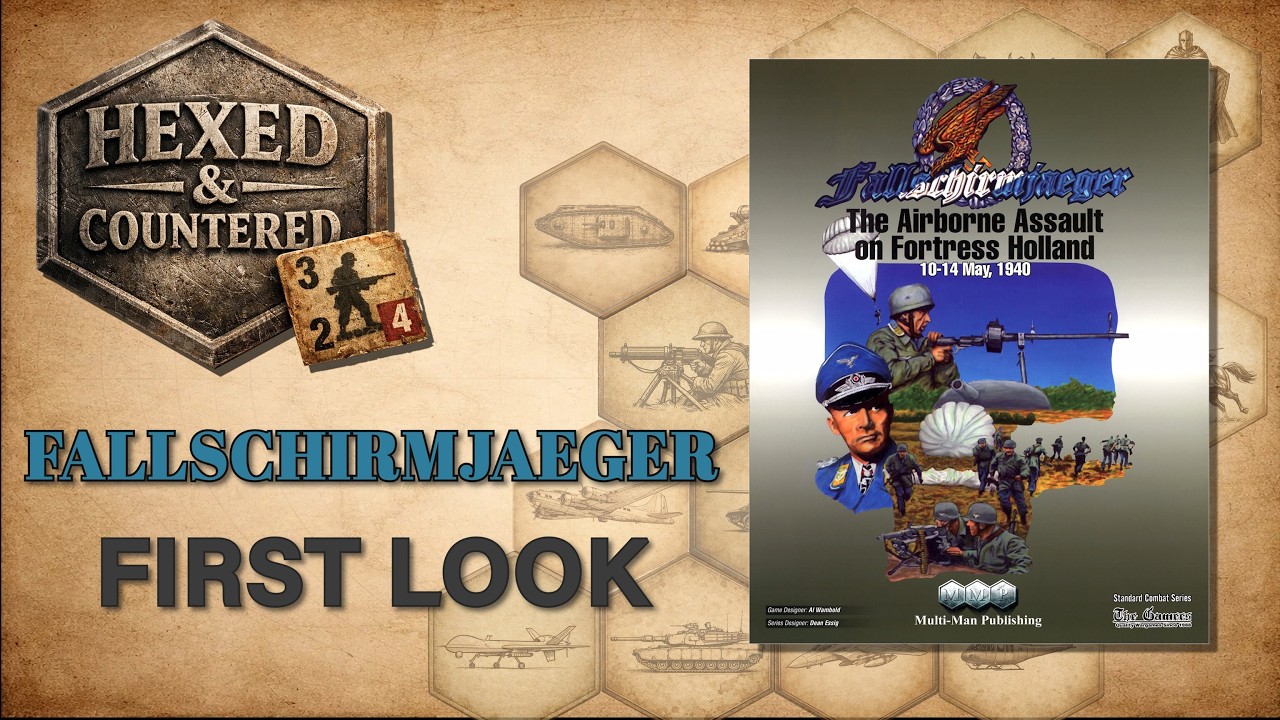
  • Fallschirmjäger: The Airborne Assault on Fortress Holland (MMP) — First Look

    Fallschirmjäger: The Airborne Assault on Fortress Holland (MMP) — First Look

    In May 1940 the Germans tried something no one had done at scale before: seizing a country’s bridges and airfields from the sky. Fallschirmjäger: The Airborne Assault on Fortress Holland covers that gamble, and MMP has brought it back as part of the Standard Combat Series. In this first look I unbox the reprint and go through what’s in it.

    SCS speed, airborne problems

    Designed by Al Wambold on Dean Essig’s Standard Combat Series engine, this is a medium-complexity game with decent solitaire suitability — a genuinely approachable entry point into World War II tactical gaming. The box includes the version 1.8 SCS rules, the game-specific rules, 560 counters, and a 22″×34″ map, plus three scenarios: the introductory bridges at Noorderke and Dordrecht, the assault on Den Haag, and the full Fortress Holland campaign. The airborne angle is what makes it stand out — you’re landing scattered and light, and everything depends on how fast you can pull yourself together before the defenders do.

    If the Standard Combat Series is your speed, there’s plenty more here. Subscribe to keep up.

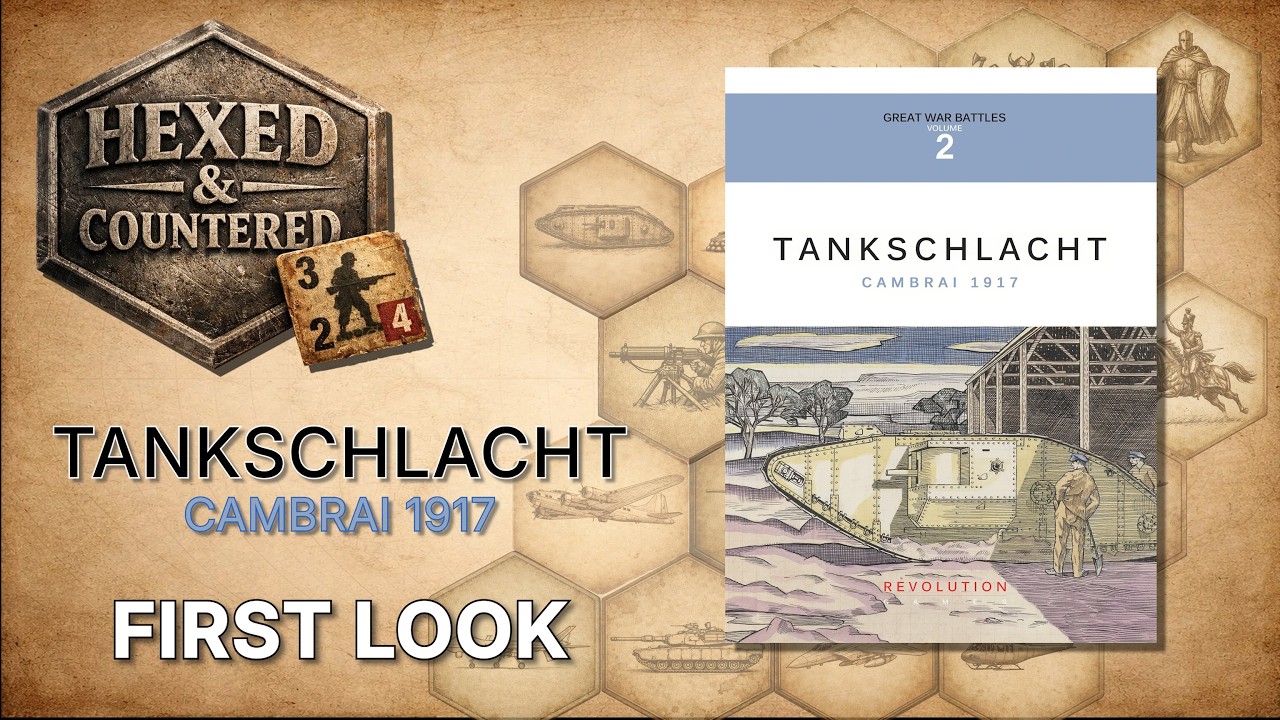
  • Tankschlacht: Cambrai 1917 (Revolution Games) — First Look

    Tankschlacht: Cambrai 1917 (Revolution Games) — First Look

    Cambrai in November 1917 is where the tank stopped being a curiosity and started being a weapon — the first massed armored assault in history, and a preview of the way wars would be fought for the next century. Tankschlacht from Revolution Games takes on that moment, and in this first look I walk through the components and the system before diving into the gameplay series.

    The birth of combined arms

    What makes Cambrai interesting on the table is the same thing that made it interesting in 1917: tanks alone don’t win, and infantry alone can’t keep up. A good treatment forces you to coordinate the two, manage the mechanical unreliability of those early machines, and reckon with the German counterattack that erased much of the initial gain. This first look sets up how the game frames those problems; the playthroughs put them to the test.

    The full Cambrai gameplay series continues on the channel. Subscribe to follow the battle.

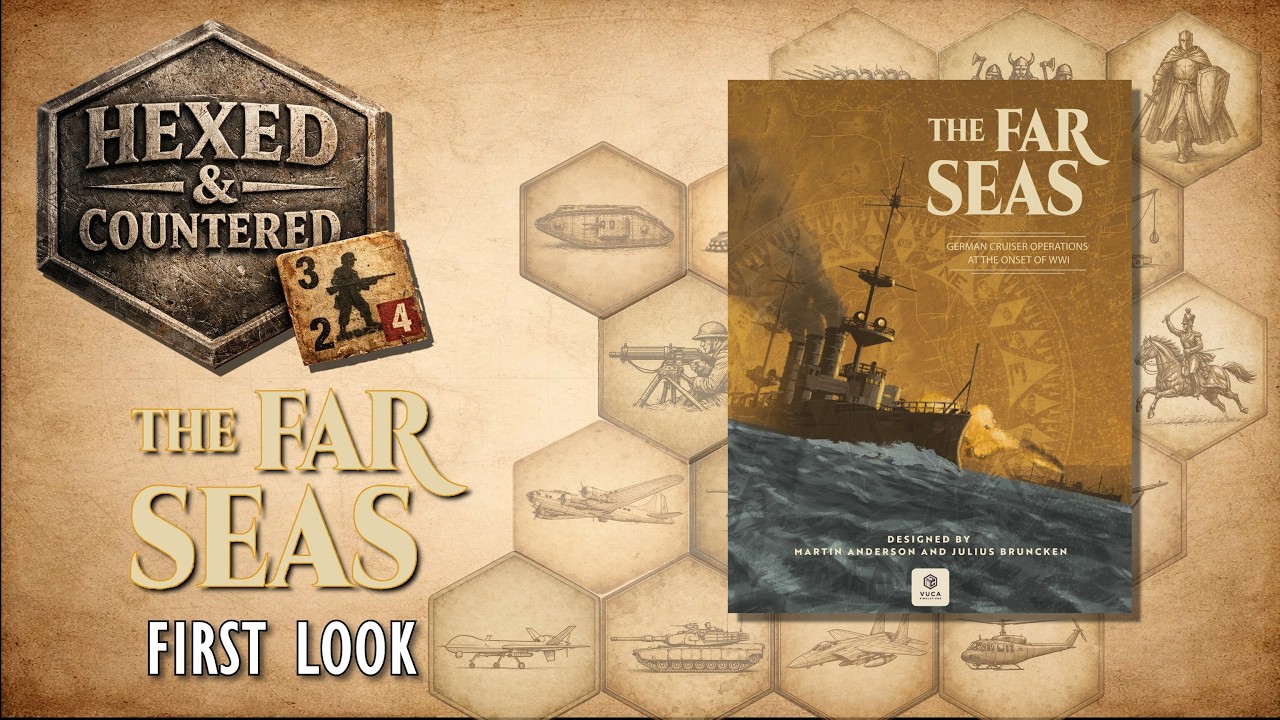
  • The Far Seas (Vuca Simulations) — First Look

    The Far Seas (Vuca Simulations) — First Look

    When war broke out in 1914, Germany had a squadron of modern cruisers on the far side of the world under Admiral Graf von Spee, with no way home and every reason to make trouble. The Far Seas, designed by Martin Anderson and Julius Brunken for Vuca Simulations, turns that opening chapter of the naval war into a solo-friendly game of raiding and pursuit. In this first look I open the box and walk the system.

    A raider’s problem

    Commerce raiding is a wonderful subject for solo play because the tension is baked in: a cruiser at large is powerful but fragile, hunted by a Royal Navy that can afford to lose ships in a way you cannot. The game hangs on coaling, intelligence, and knowing when a prize is worth the risk of being pinned down. The components look excellent, and the design offers several solitaire approaches — this first look covers the sequence of play, combat, and how the hunt comes together.

    A two-part solo playthrough follows this overview. Subscribe to sail with the squadron.